A sample decides more than a colour match
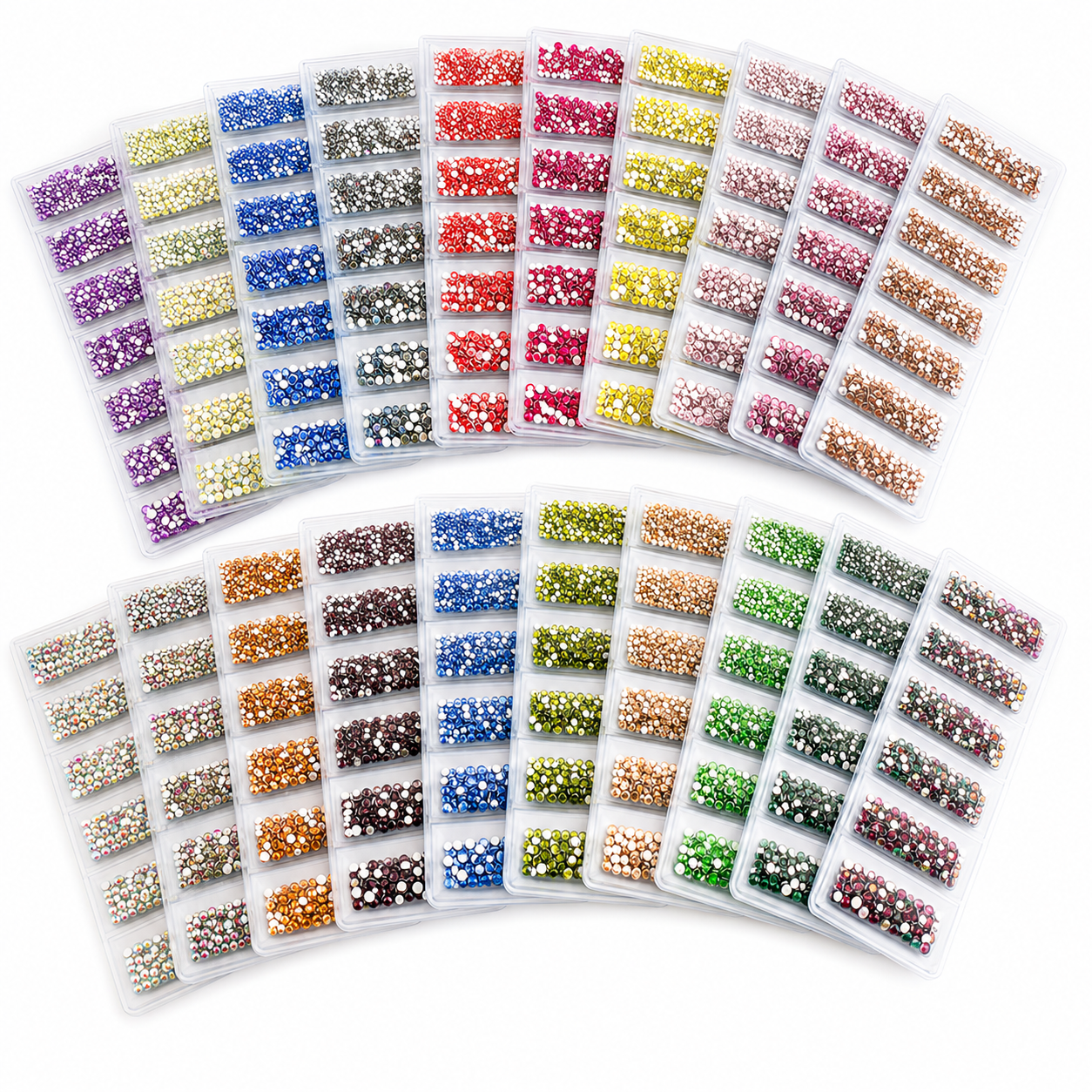
Most disagreements over crystal rhinestones trace back to a sample that was approved without a record of what it was meant to prove. A sample answers questions about colour, facet, coating and backing, but only when the buyer has decided in advance which of those the sample is testing and which still need a separate trial.
Samples are handled here as a normal part of an enquiry rather than as an exception, so the useful work happens before the request is sent rather than after the parcel arrives.
1. How long does a rhinestone sample take?
Samples usually take 7 to 10 days depending on complexity. A catalogue colour in a stock size sits at the fast end of that range. A custom colour, a new coating effect or a stone shape that is not currently in production takes longer, because the coating run has to be scheduled around work already committed to the line.
2. What should a sample request contain?
State the material, shape, size or SS range, colour reference and finish, and the application method. Add the fabric or substrate the stones will sit on, the quantity needed, and whether the sample must be produced from the exact material that bulk production will use. A request that omits the backing type usually produces a sample that cannot be approved.
3. What does a sample prove and what does it not?
It proves appearance: colour under a given light, facet cut, coating brightness and the type of backing. It does not prove adhesion on the buyer's own fabric, behaviour after repeated washing, or consistency between batches. Those need an application trial and a check on the production run, which is a separate exercise from approving a colour.
4. Why is bulk lead time longer than sample lead time?
Bulk orders usually take 15 to 30 days, and the figure moves with peak season and with special materials. A sample runs alongside existing work on the coating line, while bulk production queues behind material purchase, coating scheduling, inspection and packing. It cannot be measured from the day the sample was approved.
5. What normally pushes a rhinestone order out?
Late colour approval, label artwork that is still being revised, a mixed pack whose variant count was left open, and a deposit that arrives after the production slot was assigned. Each adds its own delay, and they tend to arrive together. Fixing the variant count early removes the most common one.
6. How should approval be recorded?
Sign and date the approved sample, keep it sealed together with the specification and any test result, give the colour standard a reference number, and state which variants the approval covers. A photograph approved by email is not a record, because it cannot be reproduced on the packing line two months later.
What to send with a sample request
- Material and shape
- Size or SS range
- Colour reference and finish
- Backing type: hotfix, flat back or sew-on
- Target fabric or application method
- Quantity and pack format
- Delivery address and courier account
- Date the sample is needed by
Sample time, bulk lead time and sample cost depend on the specification rather than on the size of the enquiry. A request that carries these points can be scheduled and quoted without a round of clarifying questions.