Two suppliers can quote the same stone, the same size and the same coating, and still be 30 per cent apart on landed cost per thousand pieces. The gap is usually not the stone. It is the pack. Pack format decides how much handling sits between the delivery and the person applying the stone, and it decides how much of the goods are damaged before they get there.
What a pack format actually has to do
A rhinestone pack has three jobs, and most pack formats are good at two of them. It has to protect the coating, because the silver backing and the colour film are the parts most easily damaged in transit. It has to let the user find the stone they want without emptying the container. And it has to cost as little as possible per stone, because packaging is pure overhead on a decorative component.
Those three jobs pull against each other. The cheapest container per unit is a sealed bag, and it is also the format that offers the least protection against stones grinding against each other. The most usable format is a divided box, and it is the most expensive and the bulkiest to ship. The right answer depends on who opens the pack.
1. Bagged rhinestones: lowest cost, highest handling
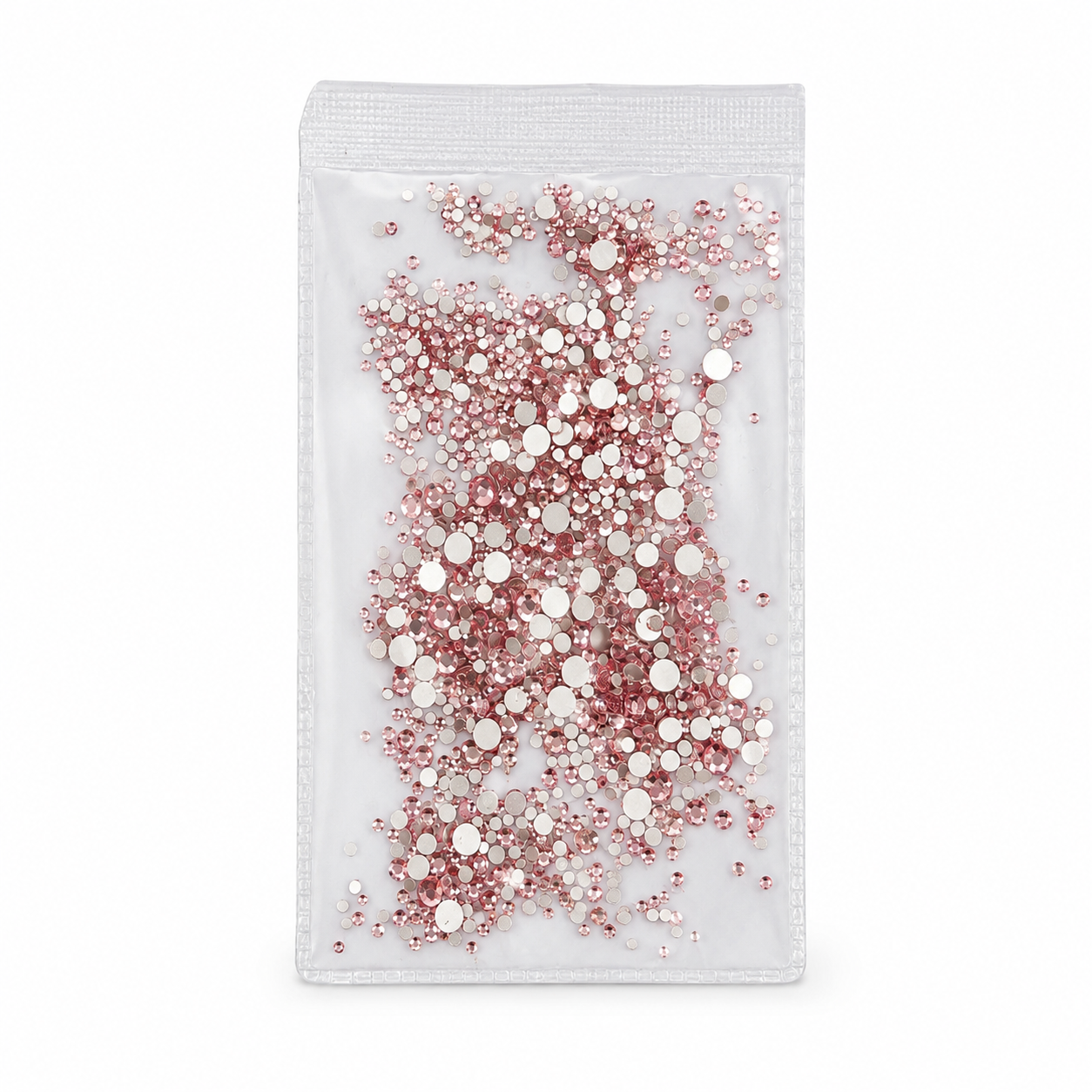
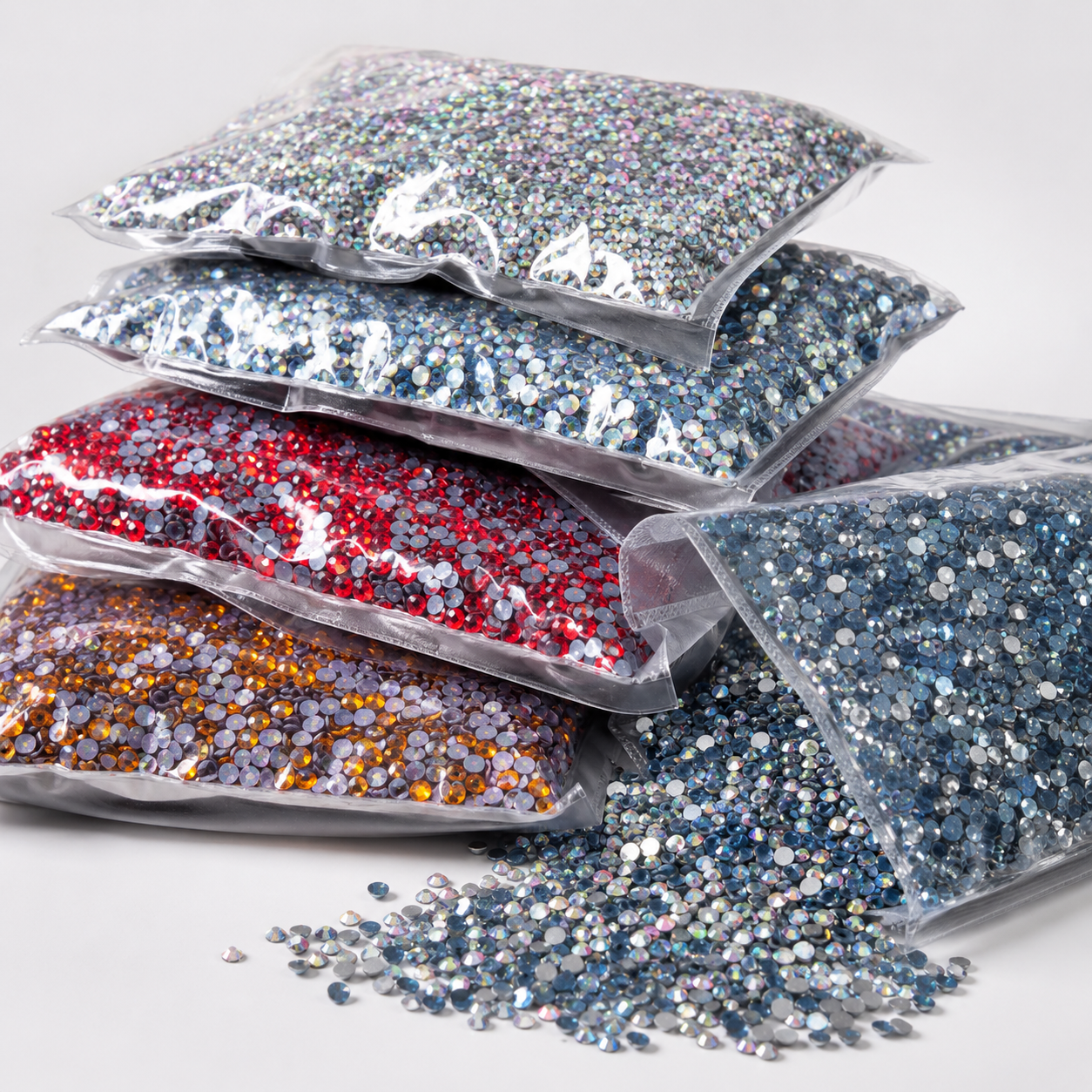
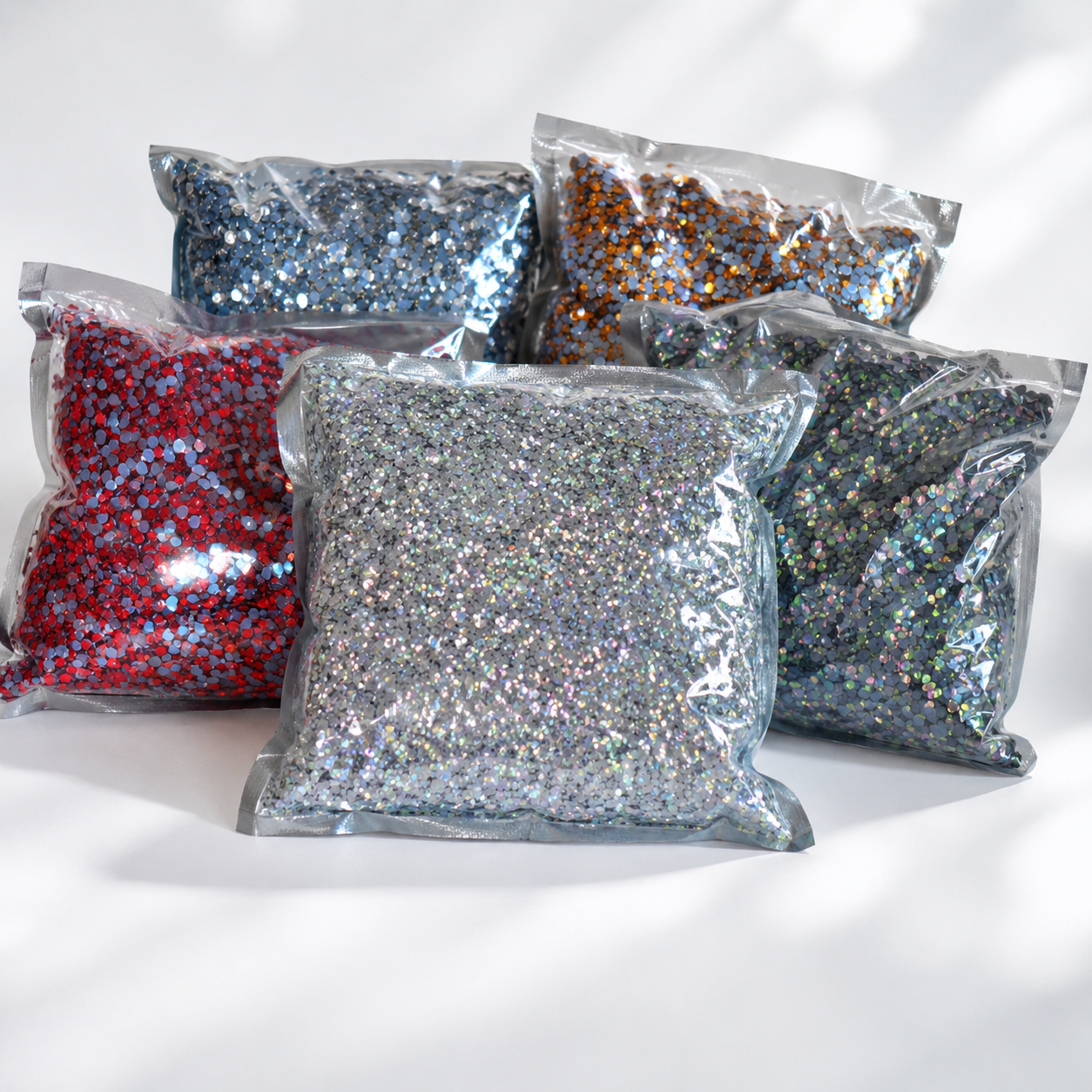
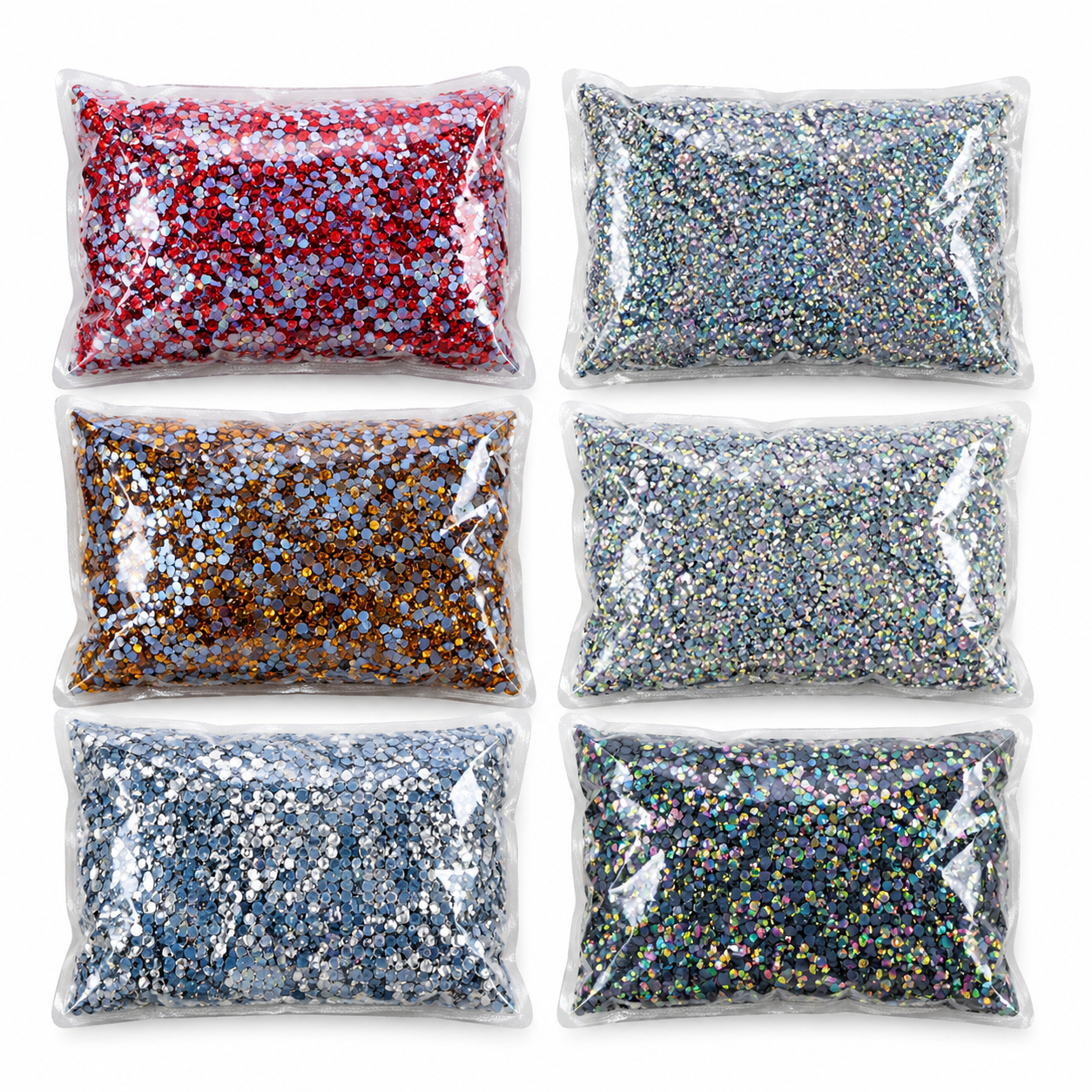
A bagged format puts a quantity of stones into a sealed pouch, usually with the sizes and colours either separated into individual bags or combined in one. On this site the bagged flat back rhinestones line combines assorted colours and sizes in a single lightweight bag, which is what makes it the cheapest way to buy volume.
The trade-off is entirely at the point of use. Loose stones in a bag settle and interlock during transport, and the facets rub against each other. That is not usually enough to damage a good coating, but it does mean the first thing a worker does is tip the bag out to sort. For a garment factory running a single colour and size through a dedicated station, that is acceptable. For a studio switching colours several times a shift, bagged stones slow the work down.
Bagged packs suit:
- Single colour, single size production runs where the bag is emptied once into a hopper or tray.
- Buyers who repack anyway, so the supplier's container is discarded.
- Sampling and colour trials, where small quantities of many shades are needed.
2. Divided grid boxes: the format built around selection
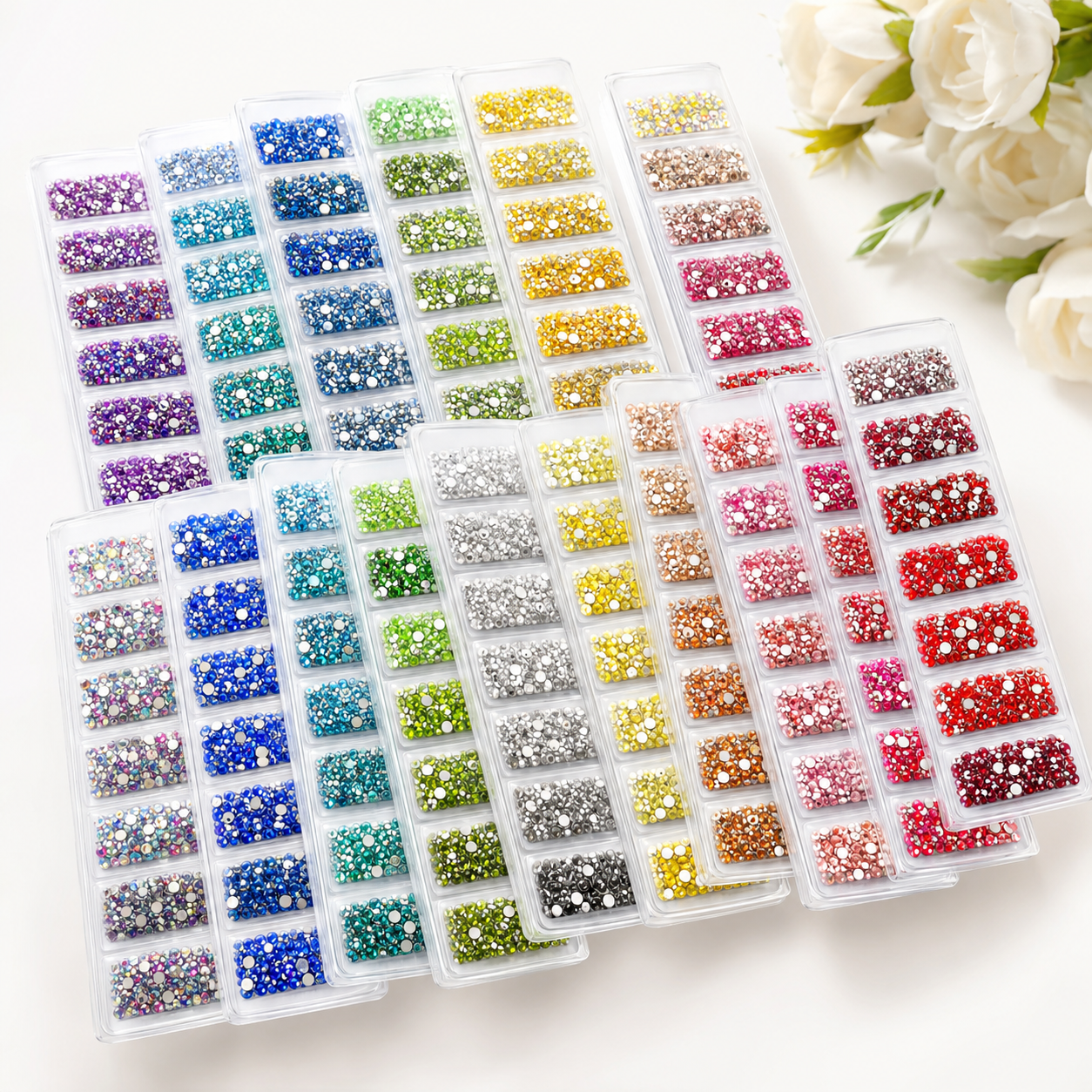
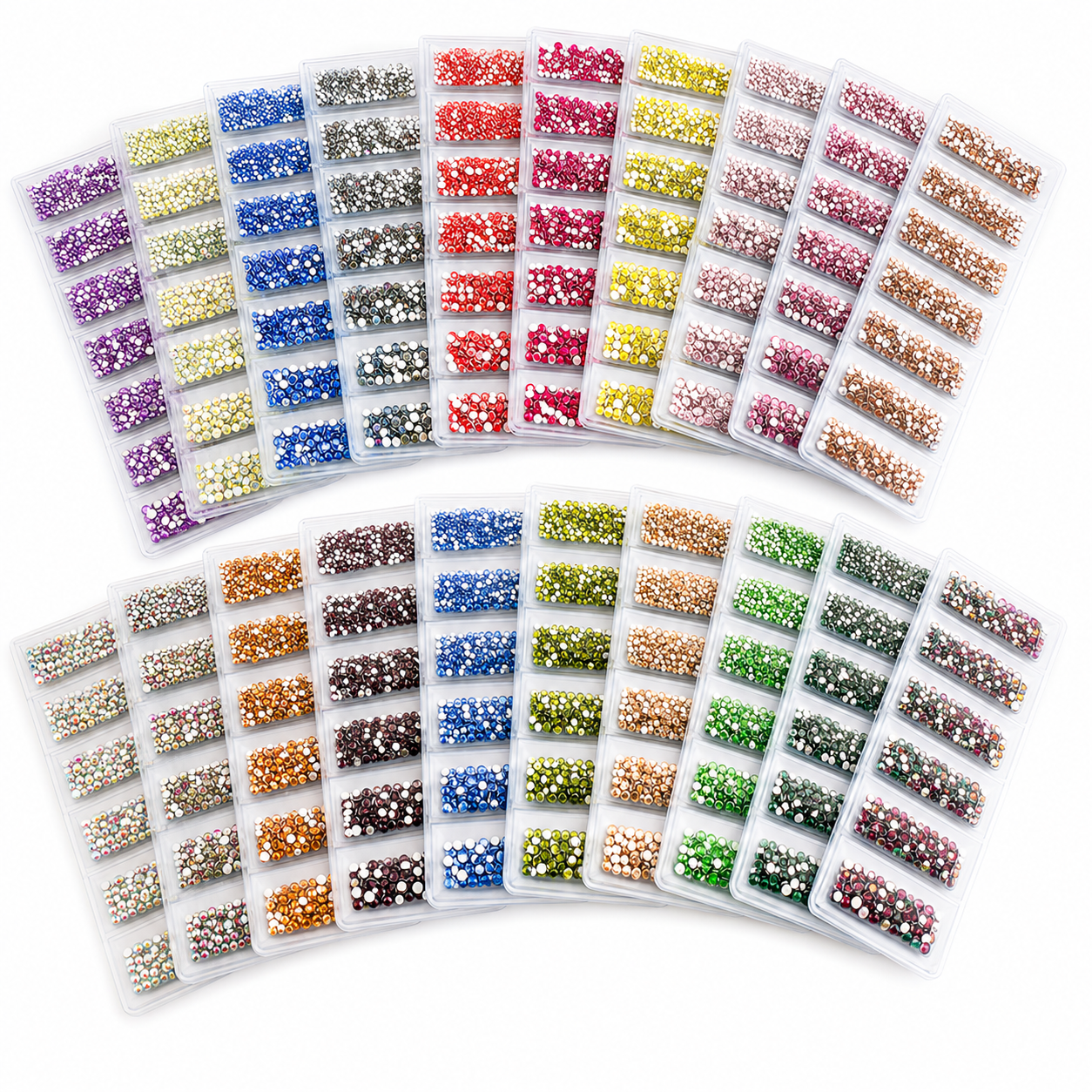
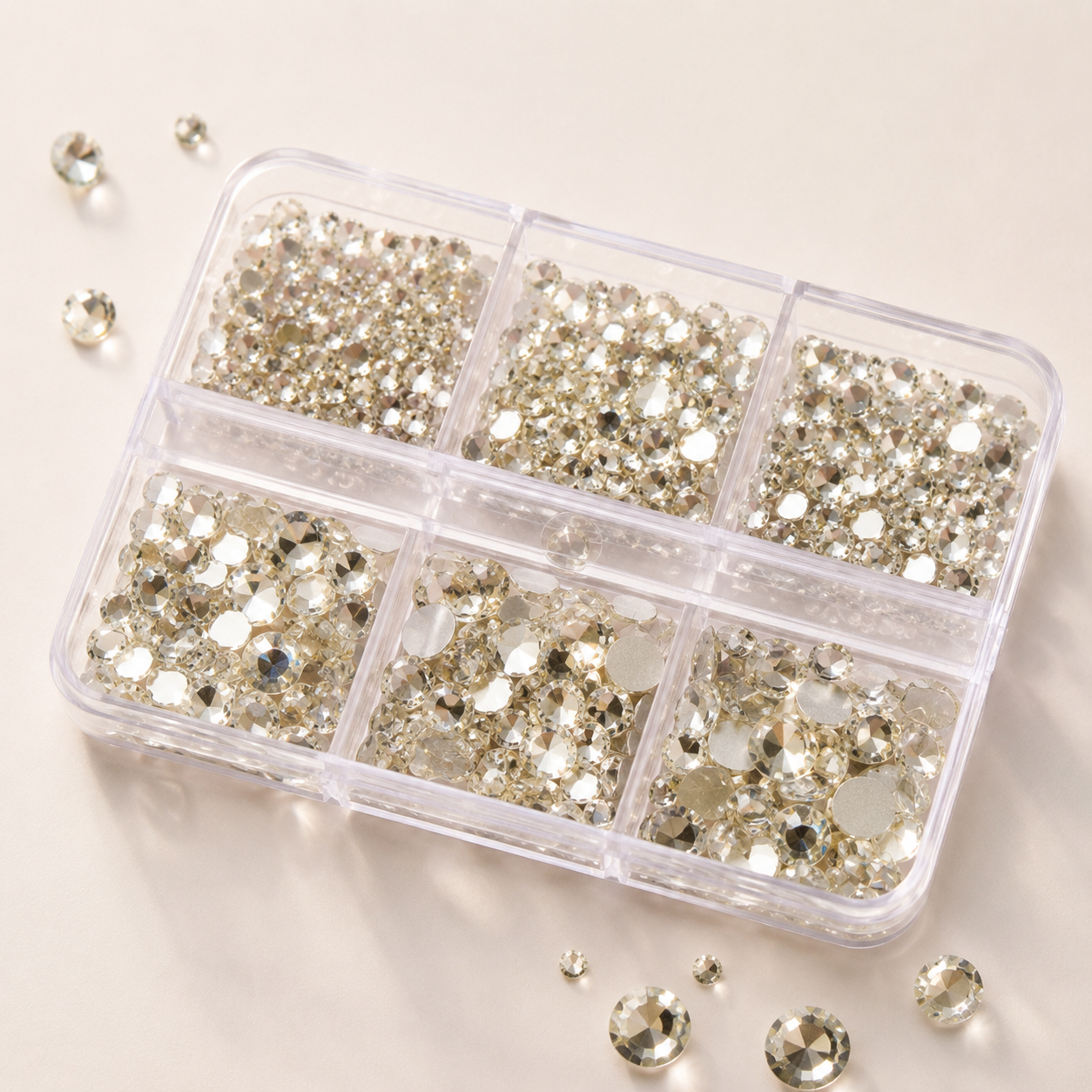
A divided box puts each colour or size in its own compartment. The grid box of multi-size flat back rhinestones is the clearest example: one transparent box, several compartments, each holding a different size so the user can reach for the size the design calls for without opening anything else.
The advantage is not only convenience. Separation stops sizes mixing, and mixed sizes are the most common reason a design drifts off spec part way through a run. Once a small stone and a large stone are in the same tray, the only way to separate them again is by hand.
The format carries a real cost penalty. Boxes weigh more, take more volume per stone and add a per-unit packaging charge. They also hold smaller quantities, so a box is a retail or studio unit rather than a production unit. This is the format to choose when the buyer is a nail salon, a craft studio, a sample library, or a reseller who wants a shelf-ready product.
Where the box format earns its cost
| Buyer type | Why a divided box works |
|---|---|
| Nail salon | Multiple colours and sizes in active use at the same time, small quantities per design |
| Craft studio / workshop | Designs vary per order, so selection speed matters more than unit cost |
| Retail or e-commerce reseller | Box is presentation as well as packaging, so it does not need repacking |
| Sample library | Each size or colour stays identifiable and does not get contaminated |
3. Kilogram bulk packs: the production format
The one-kilogram format is the one that most buyers underestimate. A kilo pack is not simply a bigger bag. On this site the large package hotfix rhinestones line uses thickened sealed aluminium foil bags holding a full kilogram, with colours packed separately and moisture protection built into the material.
The foil matters for a reason that is easy to miss. Rhinestone coatings are metal films, and metal films oxidise. A polyethylene bag lets moisture through slowly over months of warehouse storage. A sealed foil bag does not. For a factory ordering a season's worth of stock at once, that difference in shelf life is worth more than the packaging costs.
Kilo packs also change the purchase arithmetic. Price per kilogram is usually well below the per-unit price of a boxed format, because the buyer is absorbing the packaging cost in exchange for volume. The catch is that a kilo of rhinestones is a large quantity for any single design, so this format only makes sense where consumption is predictable or where the stones go into multiple products.
Matching the format to how the stones are used
The decision is easier if it starts from the consumption pattern rather than the price list. Three patterns cover most buyers.
| Consumption pattern | Pack format | Reason |
|---|---|---|
| High volume, one colour, one size, sustained | 1 kg sealed bulk pack | Lowest unit cost, and the pack will be consumed within its shelf life |
| Multiple colours or sizes in parallel use | Divided grid box | Selection speed and no cross-contamination between sizes |
| Low volume, many variants, or repacking | Bagged | Cheapest entry, and the container is not the thing being sold |
The hidden cost of repacking
Buyers who plan to repack under their own label sometimes assume they should buy the cheapest container and do the work in house. That is often right, but the calculation needs the labour line included. Repacking a kilogram of rhinestones into small retail units by hand is slow, and it introduces two quality risks: count drift between the stated quantity and the actual quantity, and damage from handling the stones more often than necessary.
Where private label packaging is the end goal, it is usually cheaper to specify the pack at the factory than to build it after import. The private label packaging guide covers how mixed sizes, colours and retail packs are planned together, and it is worth reading before settling a pack format, because the two decisions constrain each other.
What to confirm in the specification
Whatever format is chosen, four things belong in writing on the purchase order, because they are the four that vary silently between suppliers.
- Net quantity and how it is counted. Pieces per bag or box, and whether the count is exact or approximate. A stated figure of around 1440 pieces per bag is common for retail units; bulk formats are usually sold by weight.
- Compartment count and layout for a divided box, including how sizes are allocated across compartments.
- Bag material for bulk packs, since sealed foil and plain polyethylene have different shelf lives.
- Label content, including size, colour, coating and batch, so that a part-used pack can still be identified months later.
Pack format is one of the few specification decisions that can be changed late in an order without touching the stone, which makes it tempting to leave until the end. It is better settled early, because it interacts with the MOQ and with the packaging line capacity. The MOQ planning guide explains how pack format feeds into minimum order quantity, and the bulk pack nail art supplies and small pack nail art supplies ranges show the same stones offered at both ends of the pack-size scale.
Frequently asked questions
Is a kilogram pack always cheaper per stone?
Almost always, but not by a fixed margin, because the packaging share of cost falls as pack size rises and the stone share rises. Compare on landed cost per thousand pieces rather than per pack, and include freight, since a kilo pack ships far more efficiently than the equivalent volume of boxes.
Can a divided box be shipped without the stones mixing?
Yes, if the compartments have lids or the box is secured closed. Ask specifically, because open-compartment boxes can mix during transit, and mixed sizes are the most common defect on arrival.
Do bulk foil bags need special storage?
They need dry storage and to be resealed after opening. An opened foil bag no longer protects against moisture, so a factory working through a kilo over several weeks should transfer the remainder to a sealed container rather than leaving the bag folded open.
Which format should a first order use?
Bagged or a small divided box. A first order is partly a test of the stone, and there is no reason to commit to kilogram volume before the coating and the colour have been approved in production.