Start with the application, not only the colour
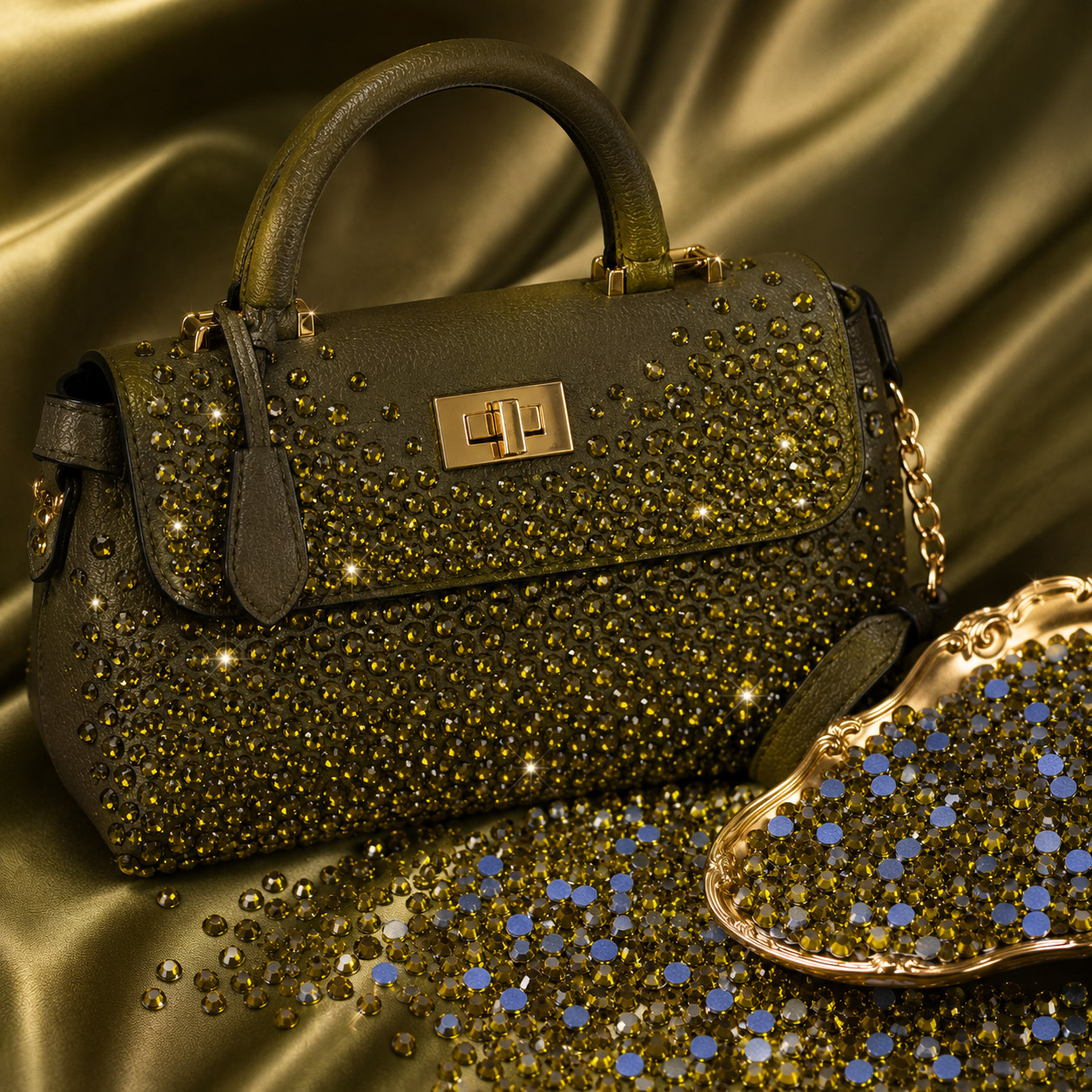
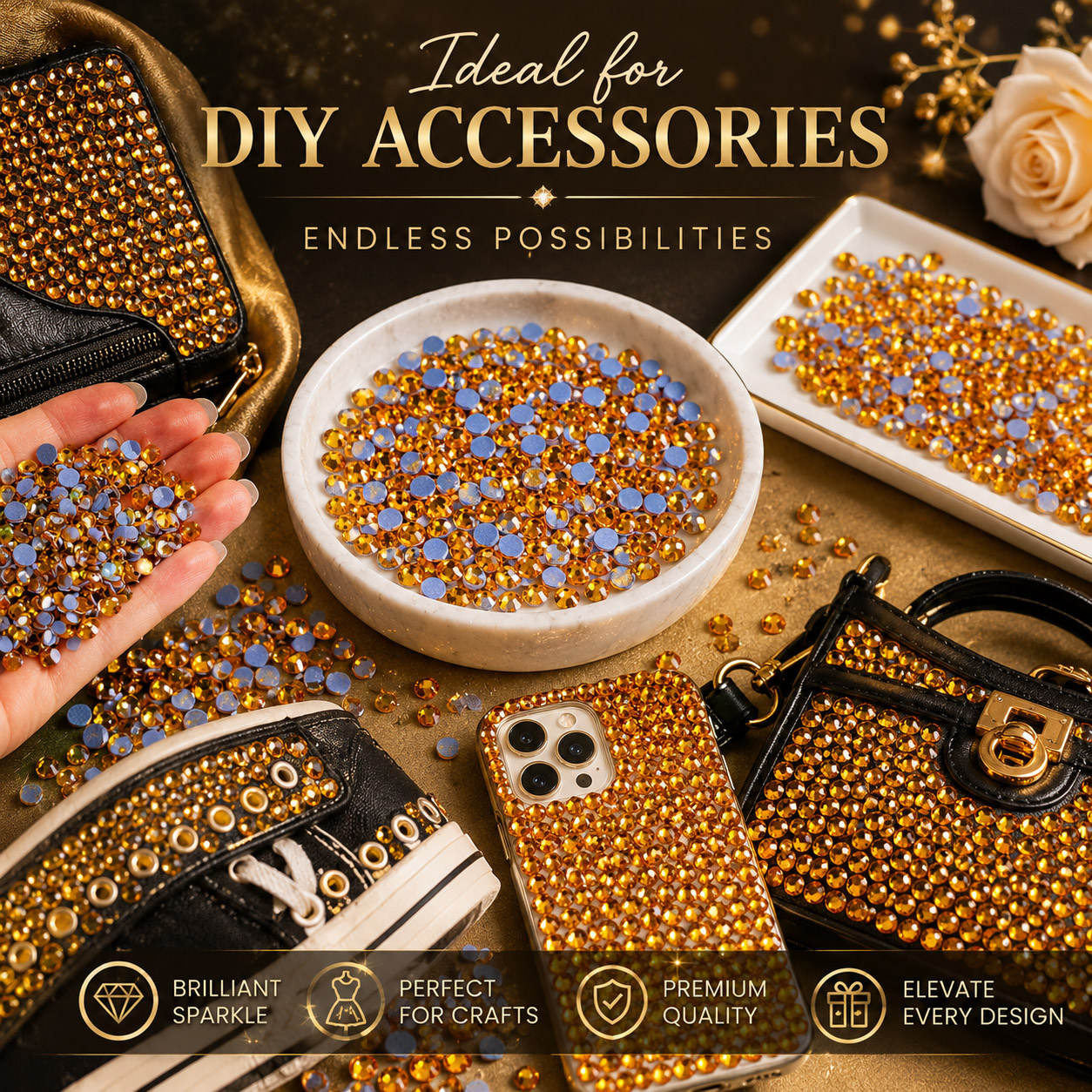
An OEM hotfix rhinestone order should begin with the final substrate and production method. Wedding dresses, dancewear, handbags, hats and DIY projects may use similar stones, but fabric construction, heat tolerance and washing expectations can differ. The buyer should identify the material to be decorated and the equipment that will apply heat and pressure.
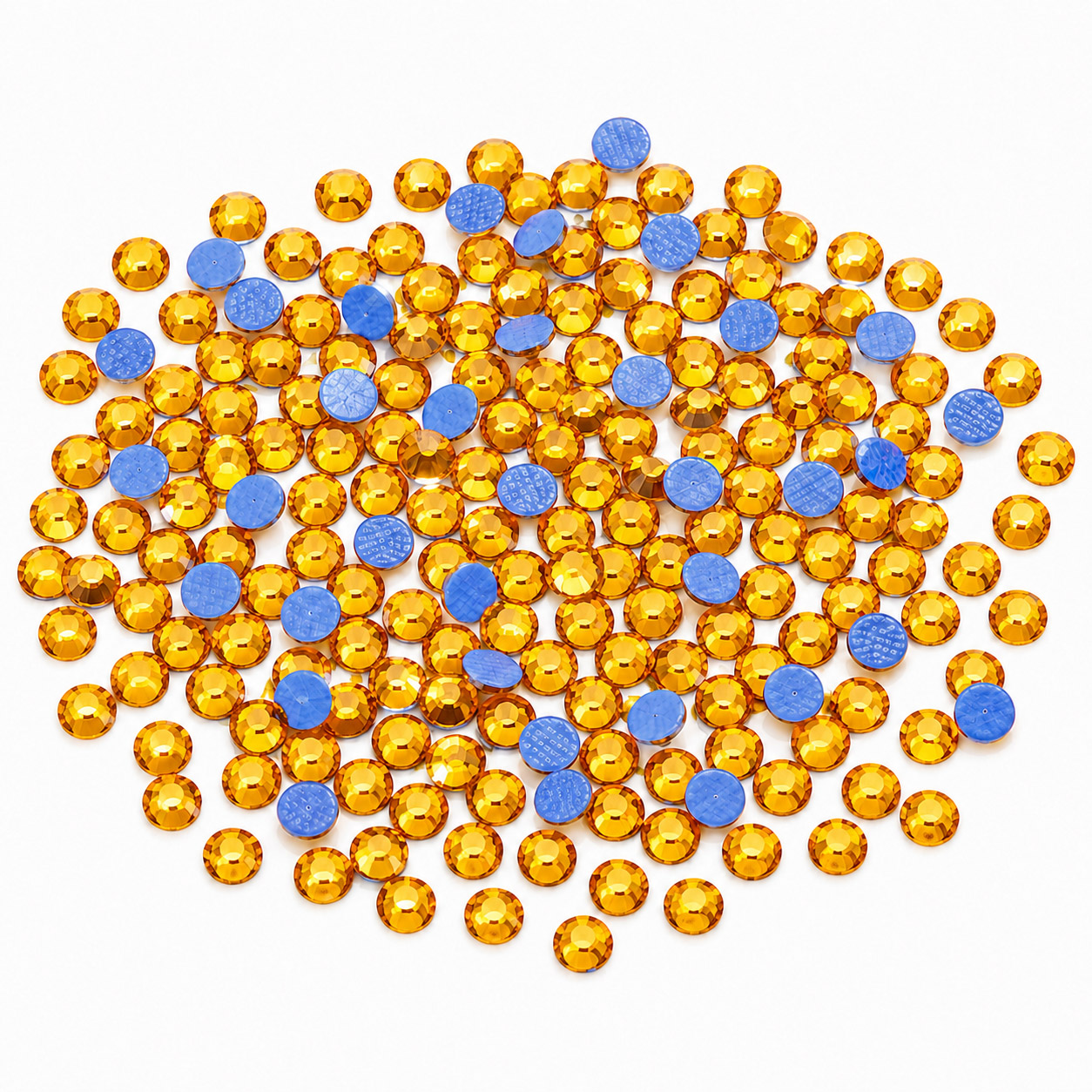
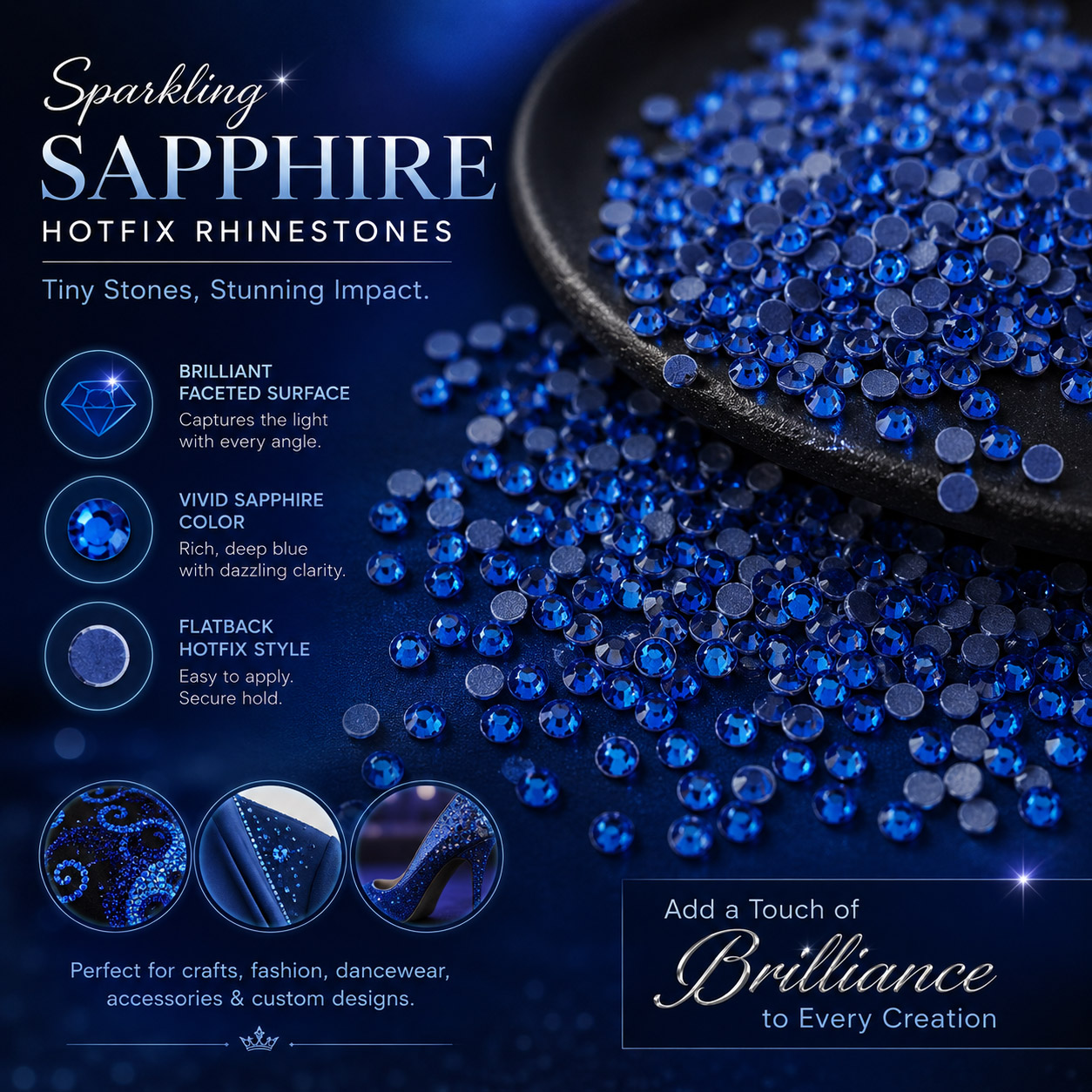
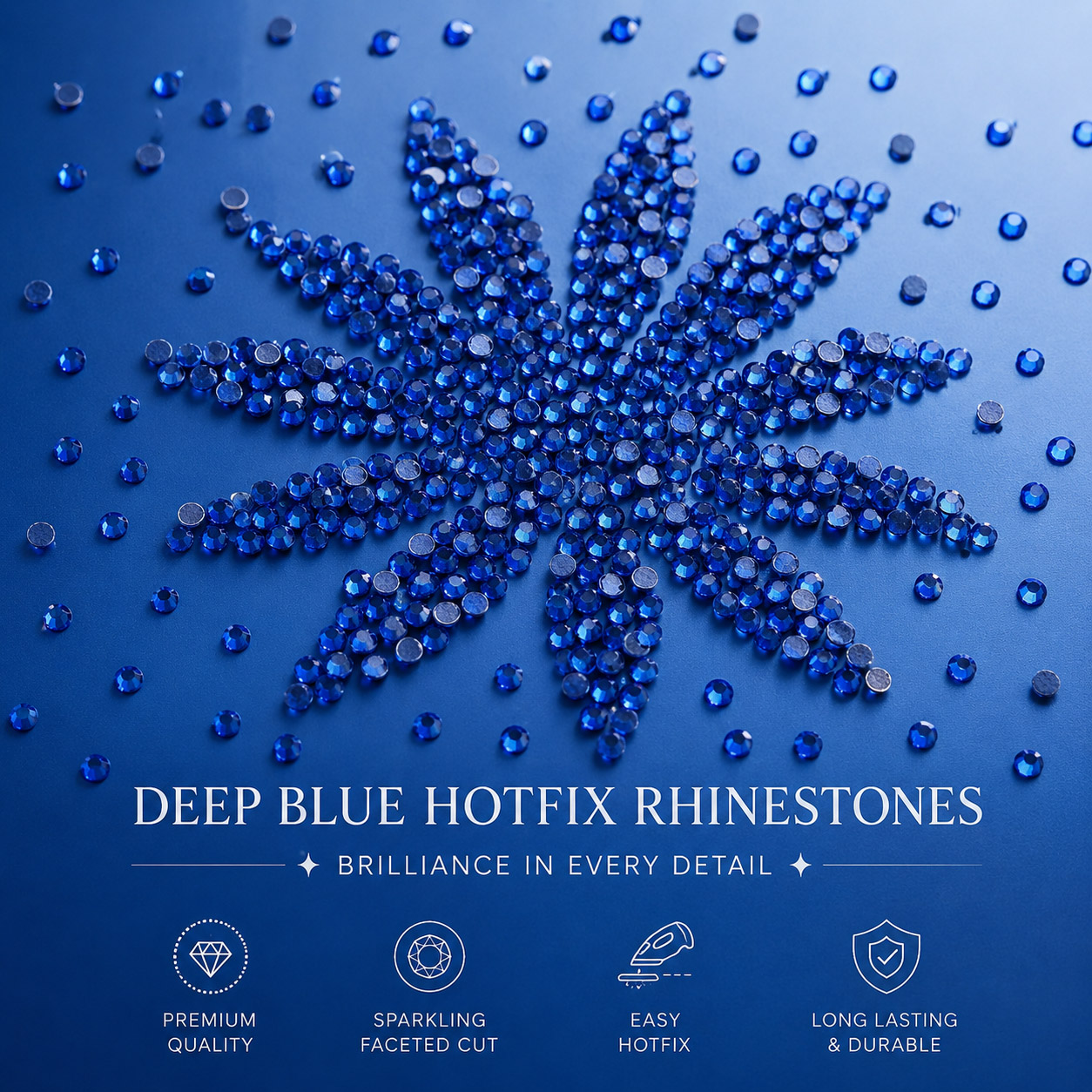
The current catalogue includes glass hot-fix rhinestones in smoky yellow, golden yellow and dark blue, along with a large-package hotfix option. These products provide a useful reference for the main variables in a bulk specification: material, colour, size, adhesive backing and packaging.
1. Material and optical appearance
State whether the project requires glass, acrylic, resin or another material. Glass rhinestones generally offer a crisp faceted appearance, while other materials may be selected for weight, cost or shape flexibility. Do not use terms such as premium without defining the measurable or visible acceptance criteria.
2. Size system and tolerance
List every required size and confirm whether the specification uses SS sizes, millimetres or both. Request a size chart for the exact product family. If the design mixes sizes, provide the ratio or quantity of each rather than leaving the assortment open.
3. Colour and finish
Record the base colour and any surface effect, such as AB, aurora or metallic coating. Review samples under consistent lighting and on the intended fabric. A dark textile can change the perceived colour of a transparent stone, so approval on a white card alone may not predict the final garment result.
4. Hotfix backing
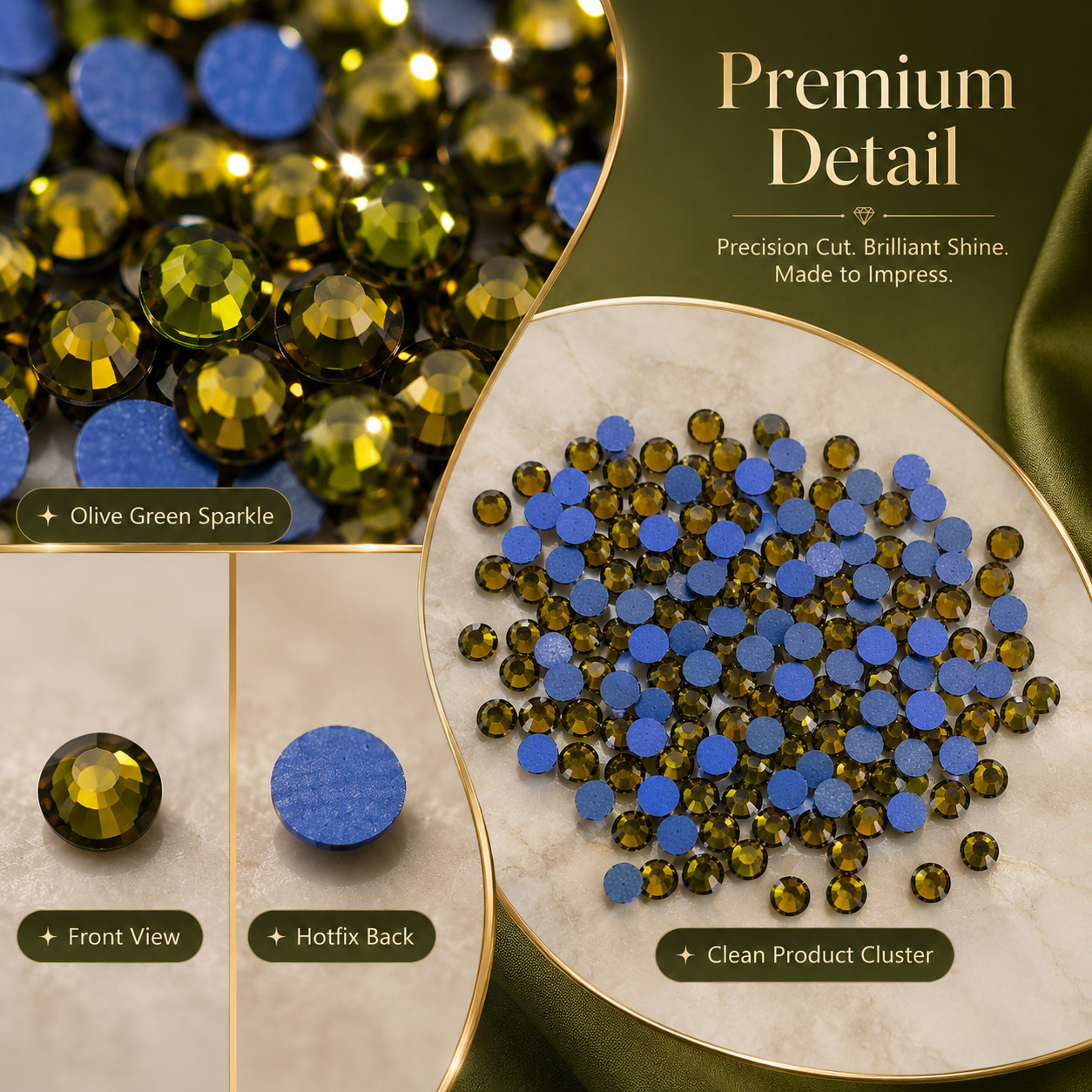
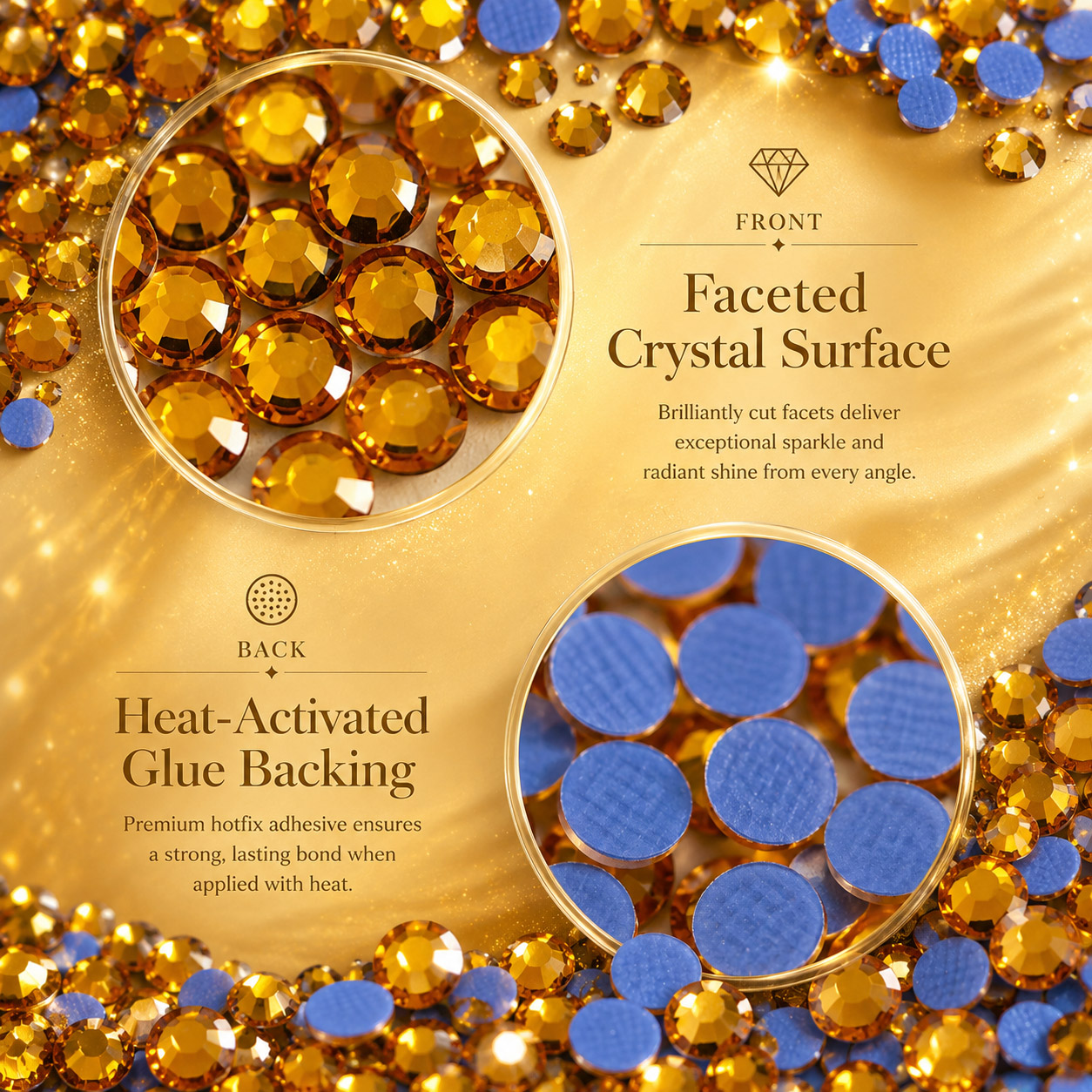
The adhesive layer is a functional part of the product. Ask for application guidance for the specific stone and test with the buyer's equipment. Temperature, dwell time, pressure and fabric thickness all influence the result. A reliable test checks initial adhesion and the expected care conditions after the bond has cooled.
5. Vacuum-coated surfaces and backing
Where vacuum coating or reflective backing is part of the design, the approved sample should define colour, reflectivity and visible consistency. Coating performance should be assessed using an agreed test method relevant to the application. Avoid relying on an unspecified claim such as durable; record the test conditions and pass criteria instead.
6. Bulk packaging
Choose packaging that protects the coating and supports the production line. Large bags can reduce handling for volume users, while separate colour and size packs simplify traceability. The label should identify material, colour, size, lot or batch reference and quantity or net weight.
7. Pre-production approval
Approve a physical sample that represents the complete specification, including the adhesive backing. If several colours or sizes are ordered, define whether each variant needs separate approval. Keep the approved sample, specification and application test result together.
Information to include in a quotation request
- Stone material and shape
- Size or SS range and mix ratio
- Colour and coating effect
- Hotfix backing requirement
- Target fabric or substrate
- Application equipment and expected care conditions
- Pack size, label and carton requirements
- Sample approval and inspection method
MOQ, lead time and pricing vary with material, colour, size mix and packaging. A complete specification allows a custom crystal rhinestone OEM supplier to quote the actual project instead of making assumptions that may change later.