Rhinestones sold for nail art look like the same product as stones sold for garment decoration. They are not the same purchasing problem. A garment factory buys one size and one colour in kilogram volume and presses it onto fabric. A nail salon or press-on nail brand buys ten variants in sets of a few thousand pieces, applies them with gel under a lamp, and is judged on how they look at arm's length under a ring light.
Those differences change which specification questions matter and which are irrelevant, and they explain why a stone that performs well in apparel production can be the wrong choice for a nail set.
1. The quantity question: sets, not kilograms
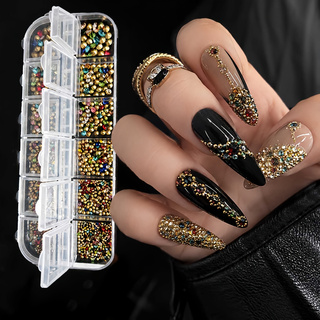
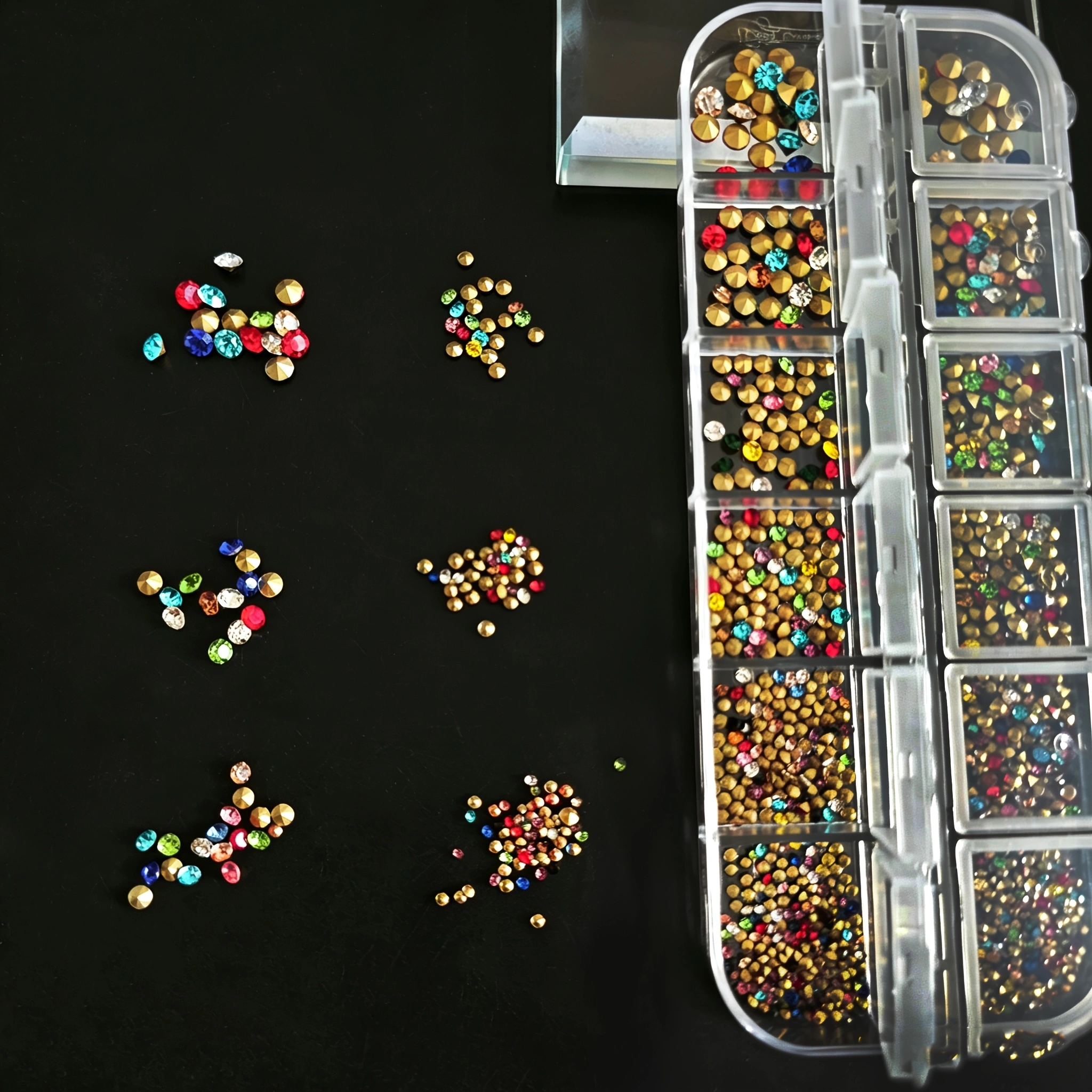
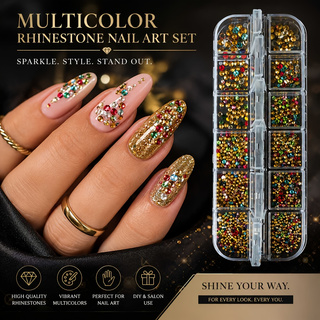
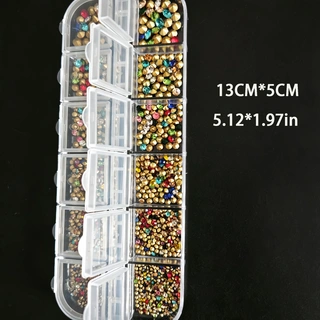
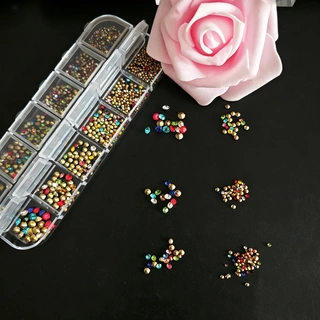
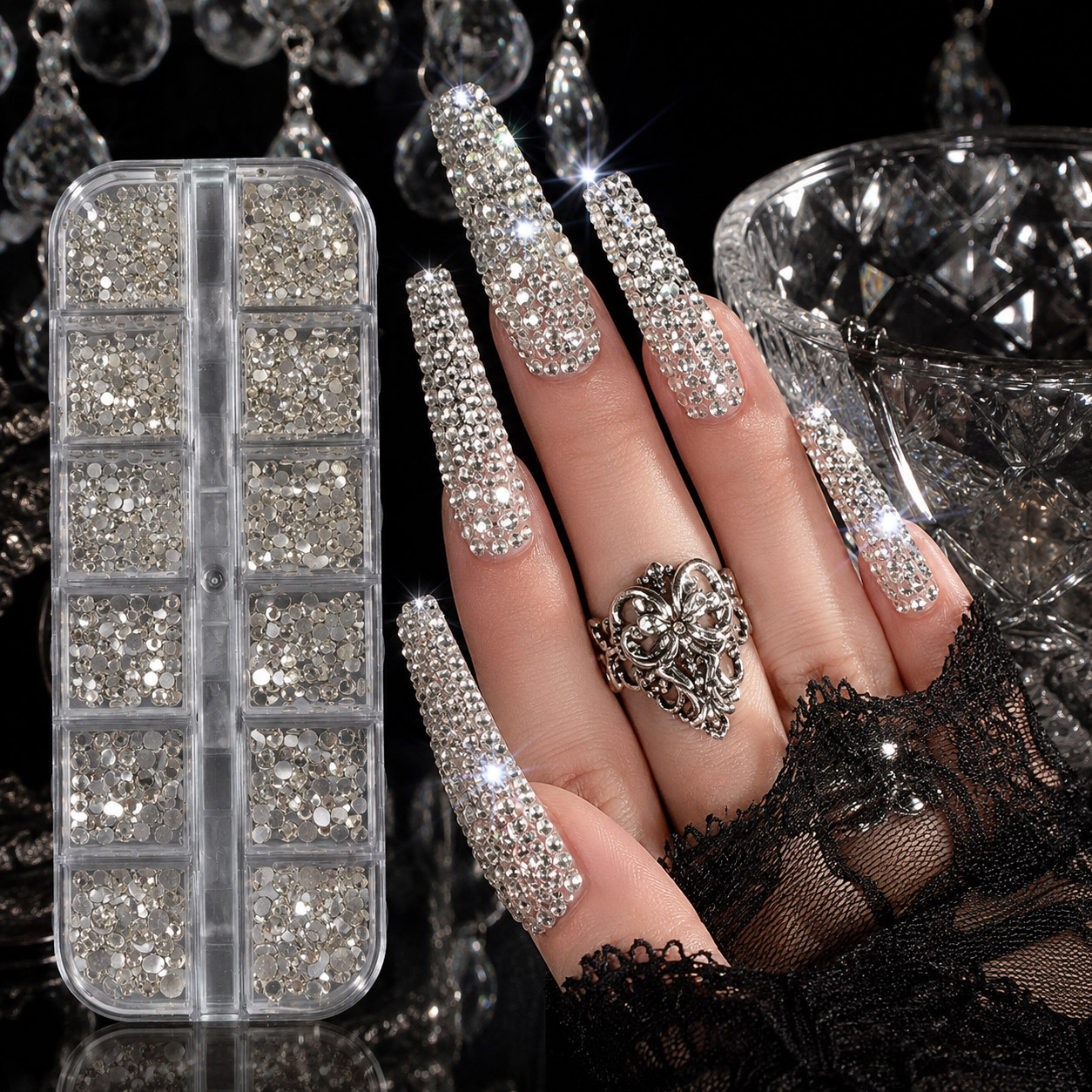
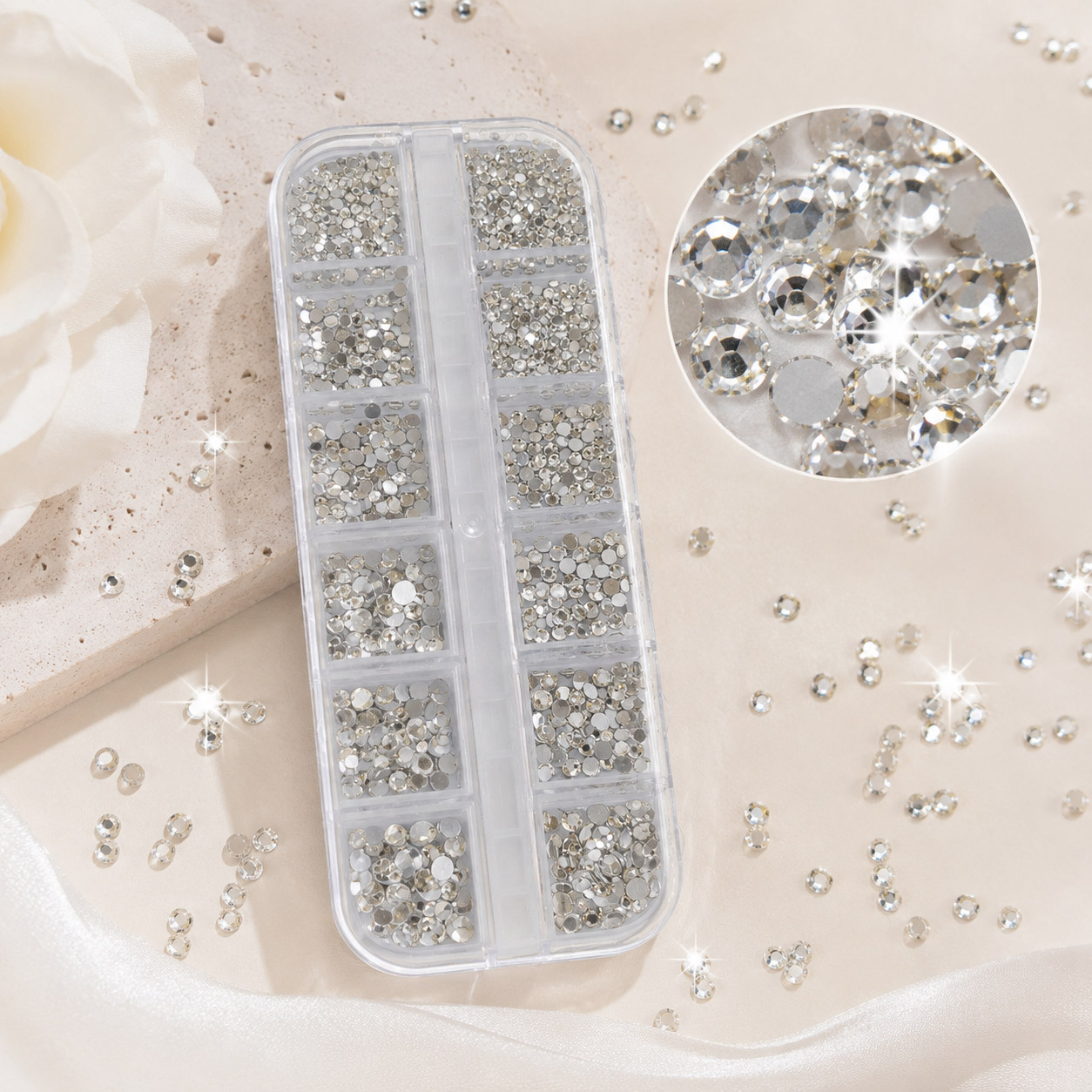
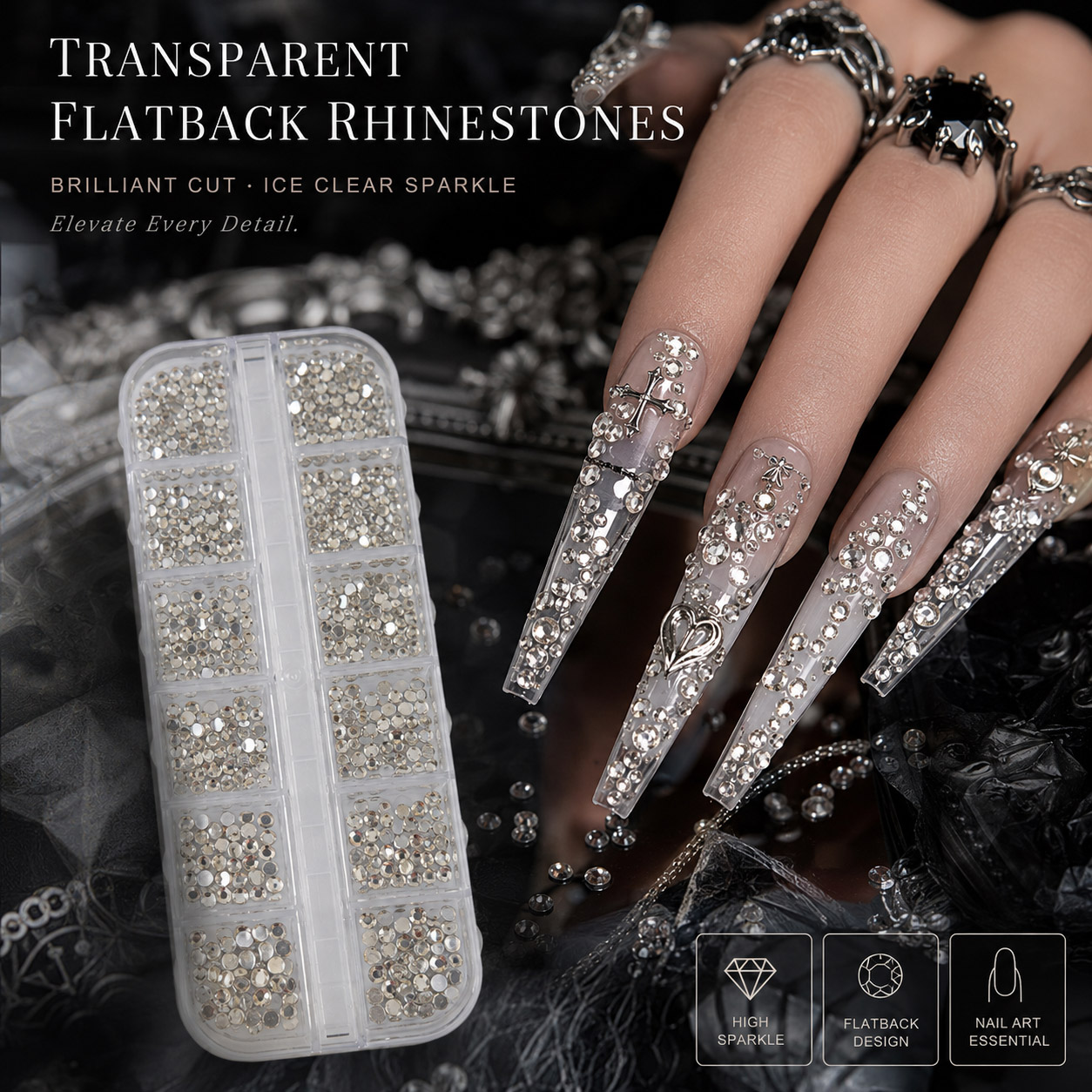
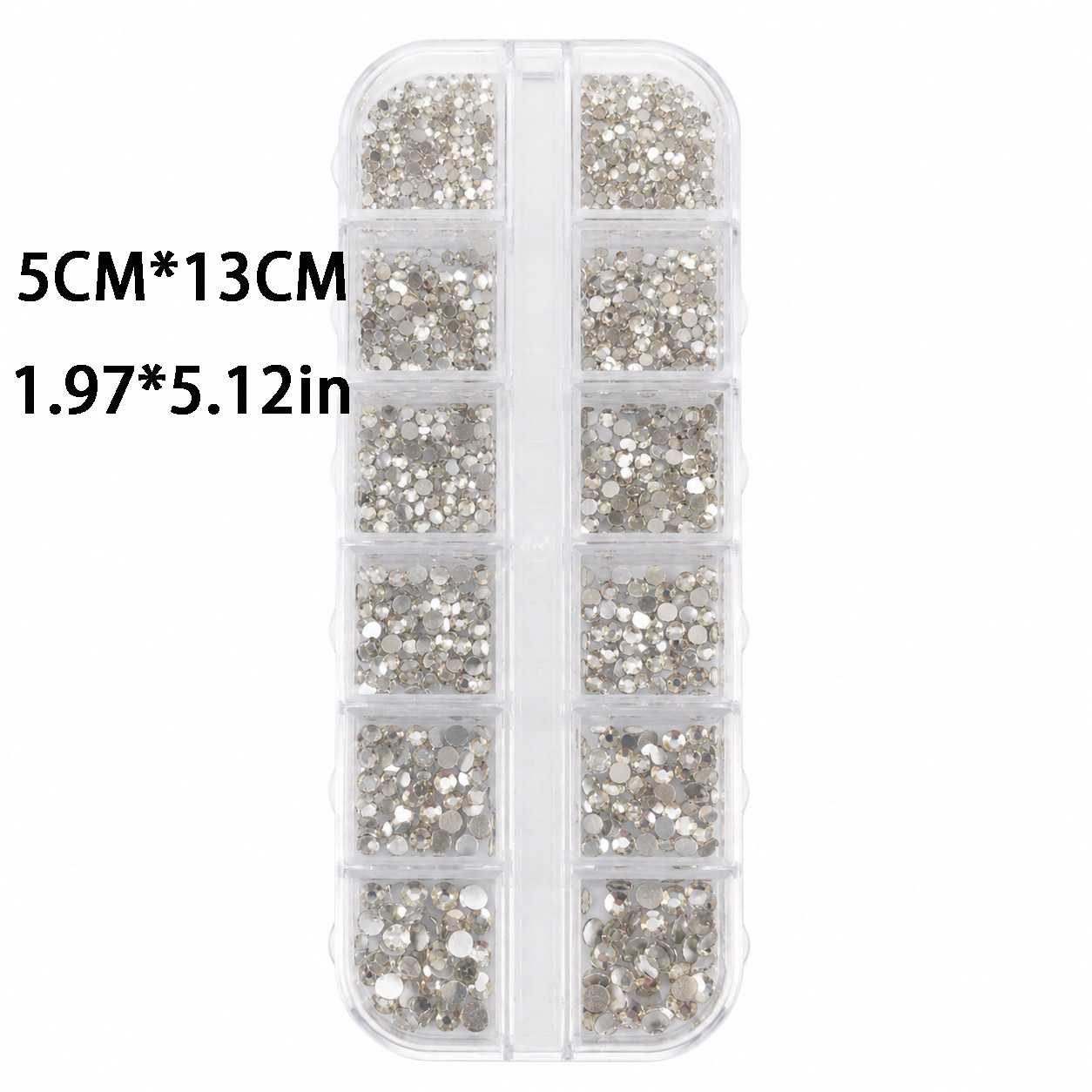
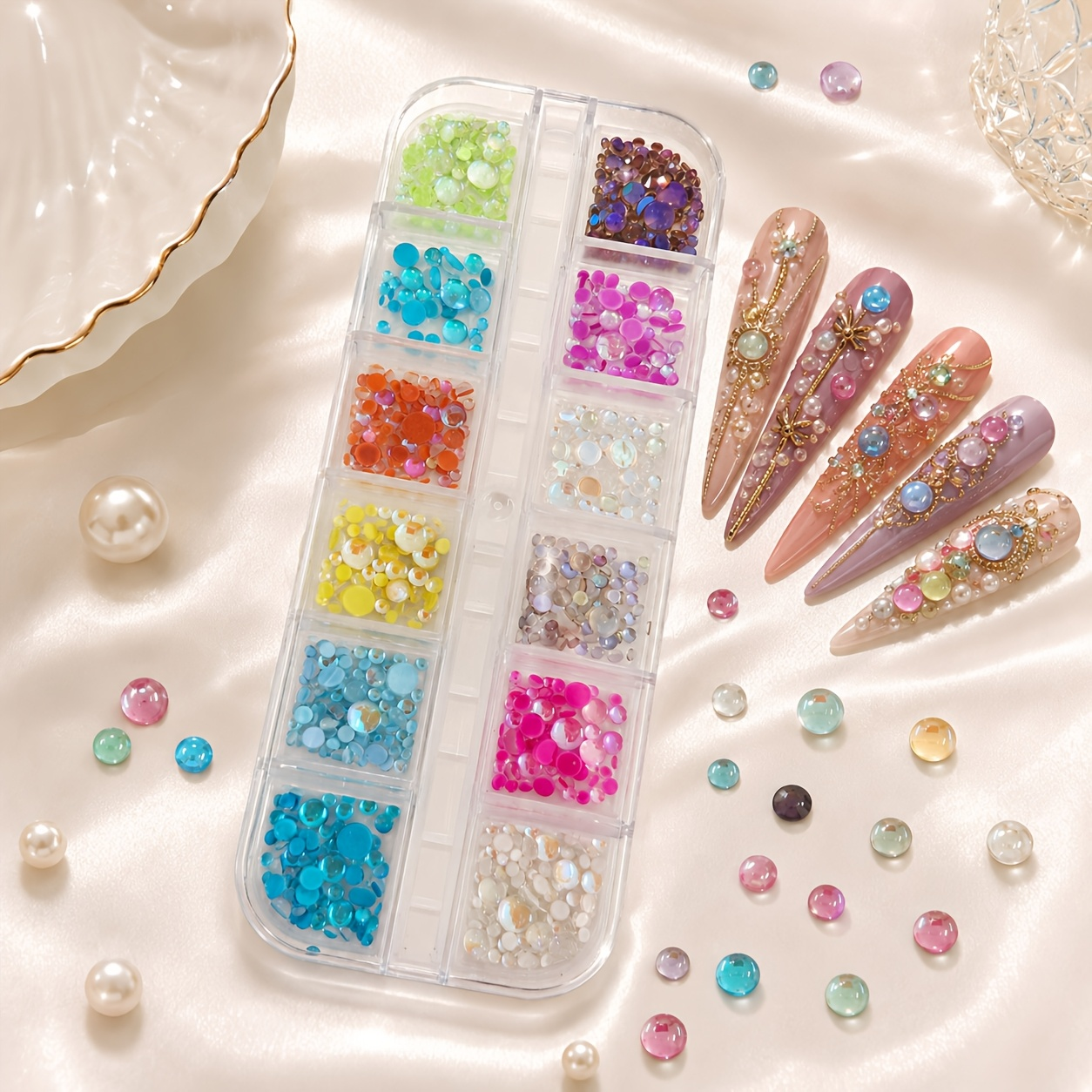
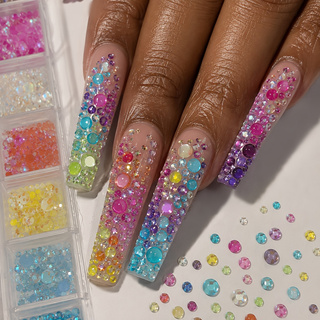
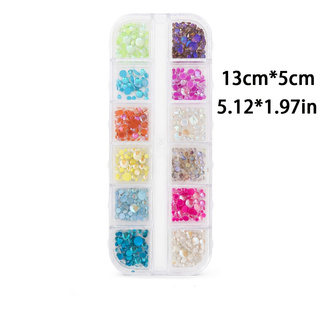
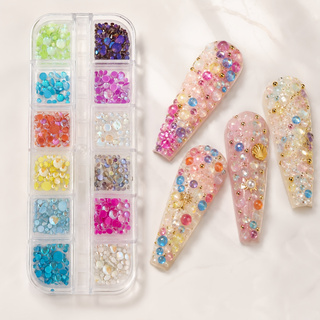
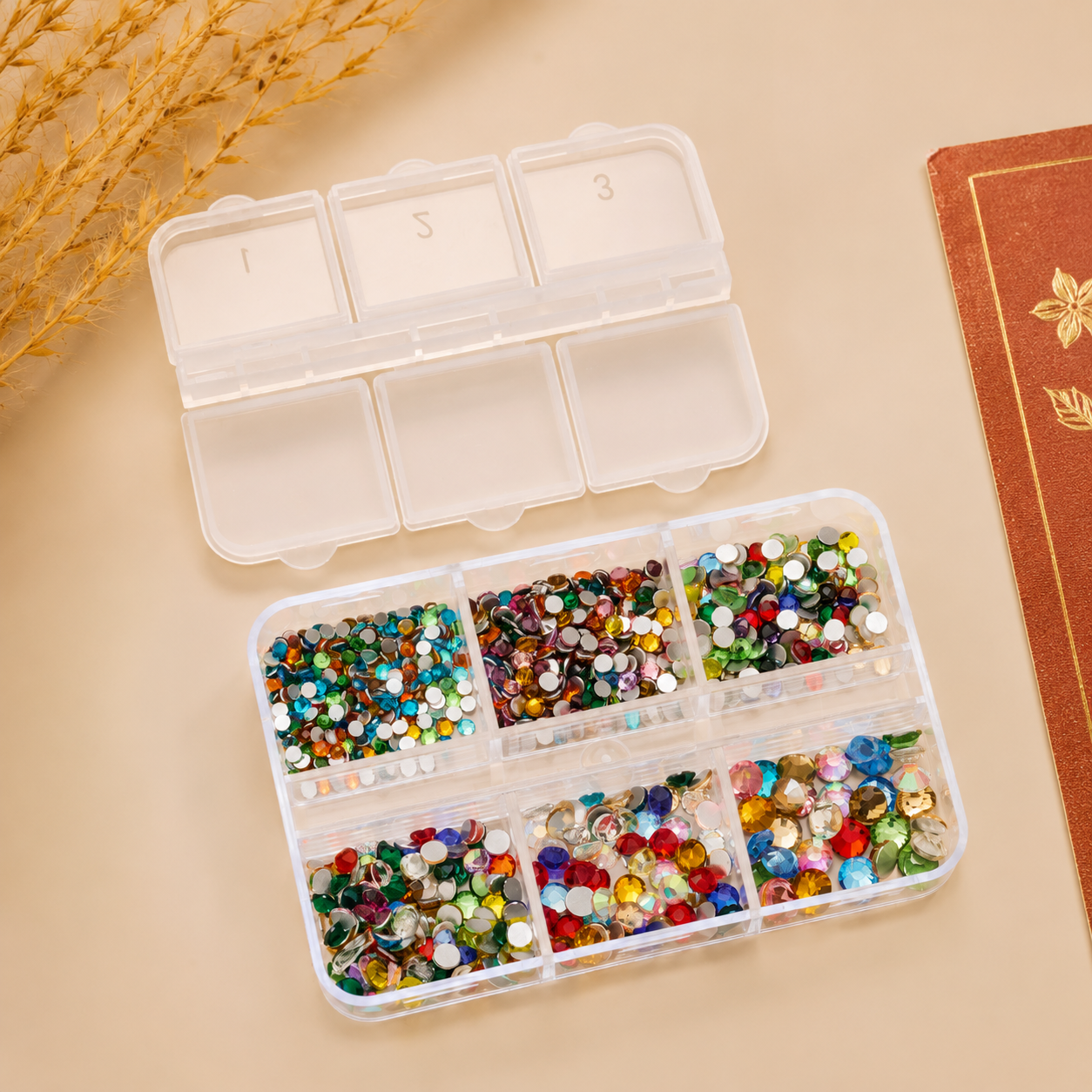
Nail art is bought in sets. The typical unit is a boxed or bagged assortment holding a defined number of pieces across several compartments. On this site the range runs from a 12-compartment mixed colour set of around 1800 pieces, through a silver-backed set of around 1700 pieces in a white 12-grid box, to a mermaid-effect set of around 1400 pieces and a three-colour small pack of approximately 1440 pieces.
Notice that the counts cluster in the 1400 to 1800 range. That is not arbitrary. It reflects the working unit of a salon: enough stones to run a few hundred sets without restocking, but few enough that the pack can be sold or used whole before the assortment goes stale. Buying nail supply by the kilogram, the way apparel decoration is bought, usually produces a pack far larger than one colour will ever be consumed from.
Reading a nail set specification
| Specification line | What it actually decides |
|---|---|
| Approximate piece count | Whether the pack is a salon unit or a resale unit; treat it as approximate, not exact |
| Compartment count | How many distinct colours or sizes are in the set, and therefore how usable it is per design |
| Mixed colour vs single colour | Whether the buyer is buying a palette or a refill |
| Mixed size vs single size | Whether the set supports detail filling and accent work in one pack |
| Backing type | How the stone attaches: gel, glue or setting |
2. Backing type is the decision that cannot be changed later
Nail application has no heat. That single fact eliminates the hotfix format entirely, because a hotfix stone carries a heat-activated adhesive that only bonds when the glue layer reaches its activation temperature. A hotfix stone used on a nail is simply a flat back stone with an inert glue layer in the way.
So nail work uses flat back stones, applied with nail glue, builder gel, decoration gel or UV gel, and cured under a lamp. The stones in the nail sets on this site are described in exactly those terms, with application instructions built around gel placement and curing rather than heat and pressure.
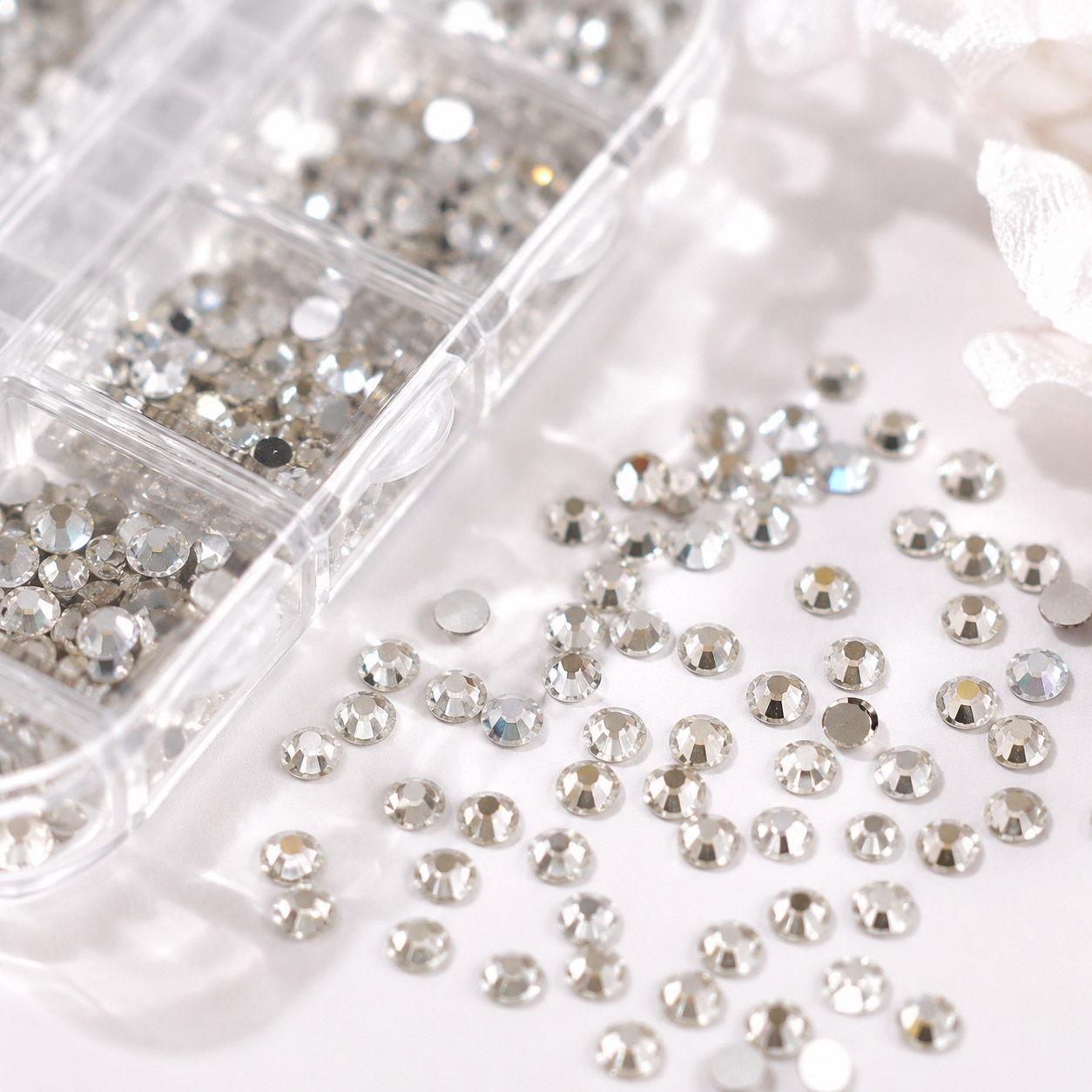
The other backing worth knowing is silver. A silver-backed stone, such as the silver bottom nail rhinestone range, has a metallic reflective layer behind the stone, which produces a harder, brighter reflection than an uncoated stone. For nail work this matters more than it does for apparel, because the stone is seen close up and the backing is often visible through the side of the stone after setting.
What each backing means in practice
| Backing | Attachment on nails | Practical note |
|---|---|---|
| Flat back, no glue | Nail glue, builder gel, decoration gel, UV gel | The default for nail art; the top coat around the edge is what holds it long term |
| Silver backed flat back | Same as flat back | Brighter, harder reflection; backing visible through the stone |
| Hotfix (heat activated) | Not applicable | Requires heat activation; unsuited to nail application |
| Sew-on with holes | Not applicable to nails | Belongs to garment and accessory work, not nail sets |
The material and size comparison for these formats is covered in more depth in the glass, acrylic and K9 crystal selection guide, which sets out how each material behaves optically and where each one belongs.
3. Charms are a separate product category
Beyond flat stones, nail art uses 3D charms: shaped resin or acrylic pieces that sit proud of the nail surface and carry their own design. Two are worth looking at closely because they show how different the specification is from a rhinestone.
The iridescent ocean nail art charms are shell, starfish, dolphin, fishtail and floral shapes with a pearlescent aurora surface that shifts between pink, blue and gold depending on the angle of light. The 3D rose charm set is a different proposition again: raised flower shapes in multiple colours, combined with imitation pearl accents in a divided box.
Three things separate charms from stones as a purchase:
- Weight. A charm is larger and lighter than its footprint suggests, and a heavy charm on a natural nail can lift at the edge. Lightweight construction is a specification point, not a marketing line.
- Profile. A charm sits above the nail surface, so it catches on fabric and hair. This is why seal and top coat around the edges is part of the application, not an optional finish.
- Mixed-material construction. Where a charm combines a cast shape with a pearl or a stone, the two components can separate under wear, so the bond between them is a quality point to check.
4. Size, and why the SS scale needs translating
Nail art uses the same SS size naming as garment rhinestones, and the same warning applies: SS is a commercial shorthand, not a measurement, and two suppliers can both list SS10 and ship stones that feel different. The specification should always carry a millimetre figure alongside the SS number.
In nail work the practical size range is narrow. Stones small enough for detailed filling cover the body of a design; a handful of larger stones provide the accent. A set that offers only one size forces the user to buy a second set, which is why mixed-size sets dominate the category. The multi-size grid box format exists precisely to put both ends of that range in one container.
5. What to check before committing to salon supply
Nail supply is a repeat-purchase category with fast design cycles, so the checks that matter are about consistency between batches rather than the qualities of a single sample.
| Check | Why it matters |
|---|---|
| Colour consistency batch to batch | Salon clients rebook; a shade that shifts between deliveries is immediately visible |
| Coating durability under gel and top coat | Solvents and lamp curing expose the coating differently from laundering |
| Compartment integrity in transit | Mixed compartments on arrival means the set cannot be sold as a set |
| Piece count tolerance | Sets are sold with approximate counts; confirm what tolerance the supplier works to |
| Restock availability of the same assortment | A set that cannot be reordered in the same composition breaks a salon's continuity |
Colour consistency is the check most often skipped and most often regretted. The custom colour matching process explains how a shade moves from sample to production approval, and the same logic applies to repeat orders even where no custom colour was specified: the reference has to be held, or the second delivery will not match the first.
Bringing it together
Nail art rhinestone buying comes down to four decisions made in order. Choose flat back over hotfix, because there is no heat in the process. Choose a set size and compartment layout that matches how many variants are in active use. Choose mixed or single colour depending on whether the purchase is a palette or a refill. Then lock the colour reference so the next delivery matches.
The garment side of the category is a different problem, and the hotfix application and wash resistance guide covers it. Buyers who supply both markets should not assume one specification serves both.