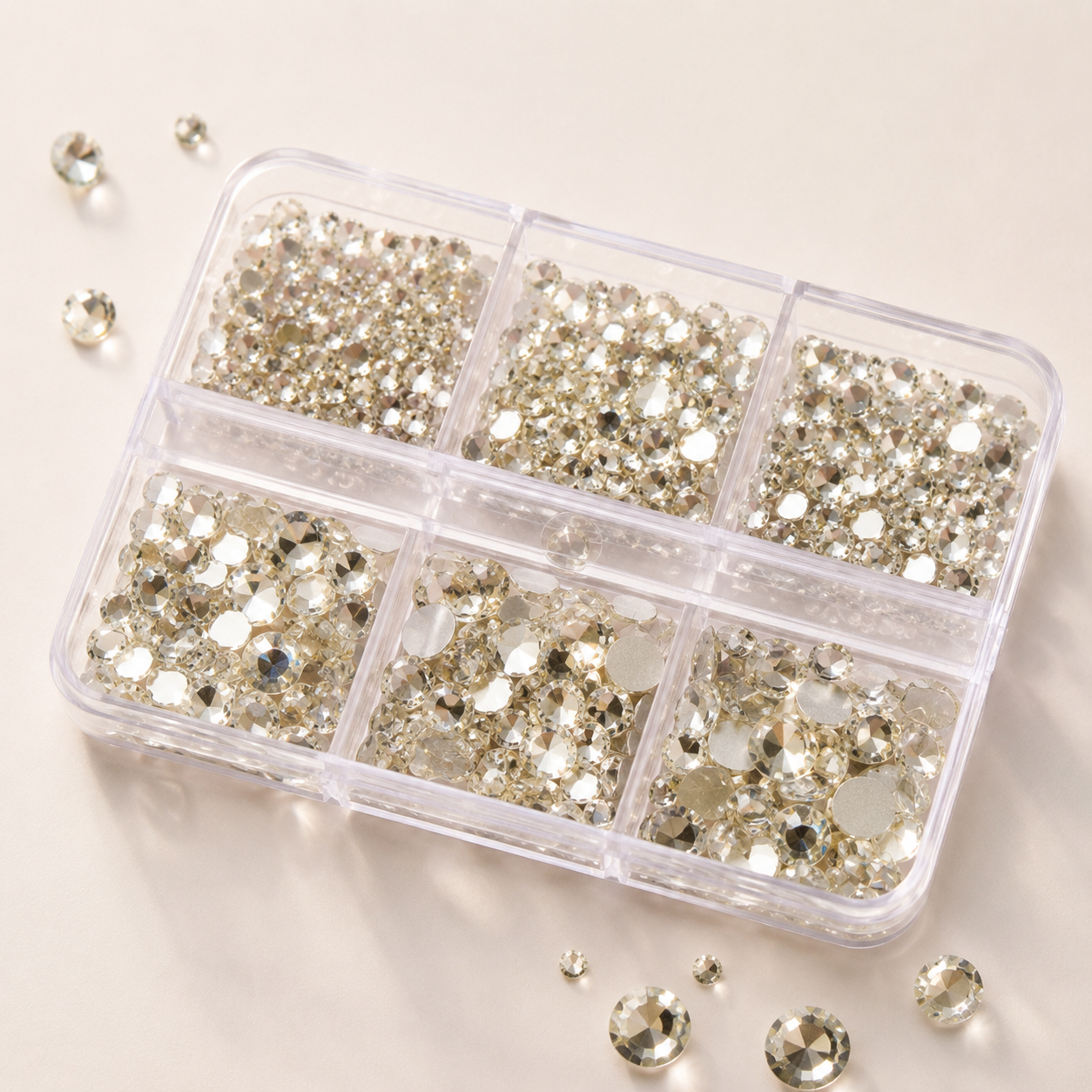
Rhinestone specifications are written in a shorthand that assumes the buyer already knows the answers: SS sizes, flat back or pointed back, glass or acrylic. Choosing the wrong combination is the most common and most expensive sourcing mistake in this category, because the error only becomes visible once the goods are stitched, glued or pressed onto a finished product.
Material Comparison: Glass, Acrylic and K9 Crystal
Three materials cover almost all decorative rhinestone production, and they are not interchangeable. Each has a distinct optical character and a distinct cost position.
| Property | Glass Rhinestone | Acrylic Rhinestone | K9 Crystal Rhinestone |
|---|---|---|---|
| Refractive character | Bright, hard sparkle | Softer, plastic-like sheen | Highest clarity, sharpest sparkle |
| Facet sharpness | Good, machine cut | Rounded, less defined | Excellent, precision cut |
| Weight feel | Substantial | Light | Substantial and dense |
| Surface hardness | Scratch resistant | Scratches easily | Most scratch resistant |
| Typical position | Mid to premium | Entry level, high volume | Premium, jewellery grade |
| Best suited to | Hotfix and flat back apparel | Budget craft and toy decoration | Fashion jewellery and premium nail art |
The practical choice usually follows the end product. Acrylic keeps cost down where the stone is small, densely packed and viewed at a distance. Glass is the workhorse for hotfix apparel decoration. K9 crystal is reserved for applications where the stone is the focal point and its sparkle is the product.
Reading SS Sizes Correctly
Rhinestone sizes are expressed in “SS” numbers, and the scale is not linear or intuitive. SS is a legacy naming convention, not a measurement, so two suppliers can both list “SS10” and still ship stones that feel different if their cutting tolerance differs.
The practical consequence is that size should always be confirmed by millimetre diameter in the specification, with SS used only as the commercial shorthand. Smaller stones are used for detailed filling and gradient work; larger stones carry the highlight and the main design motifs.
Backing Type Decides the Application Method
The backing is what determines how a stone attaches, and this choice is driven entirely by the substrate and the production process.
| Backing Type | Attachment Method | Suitable Substrates |
|---|---|---|
| Hotfix (glue backed) | Heat press or iron melts the glue layer | Cotton, polyester, denim, PU leather, blended fabrics |
| Flat back (no glue) | Manual gluing, rhinestone pen or tweezers | Nail art, resin, phone cases, hard surfaces, mixed media |
| Sew-on with holes | Needle and thread, or wire | Delicate fabrics, knitwear, swimwear, garments needing guaranteed hold |
| Pointed back | Setting into a bezel or claw mount | Jewellery, earrings, brooches, high-value decorative work |
Sew-on stones carrying real thread holes are the correct answer wherever a stone must survive demanding laundering or where heat is not an option. They cost more in labour, but they do not fail through adhesive fatigue.
Colour Effects and Coating Systems
Colour in a rhinestone is a coating effect rather than a body colour, which means the same base stone can be produced in an extremely wide shade range. The commercially significant families are worth understanding separately.
- Solid colours — a defined, stable shade such as sapphire blue, bright red or champagne gold. Best for brand-consistent ranges.
- AB (aurora borealis) — a multi-layer interference coating that shifts hue as the viewing angle changes. It reads as iridescent rather than a single colour.
- Aurora and silver aurora — brighter, more silver-dominant interference effects built on the same layered principle.
- Fluorescent and iridescent specials — high-saturation effects for nail art and seasonal craft ranges, where novelty drives the sale.
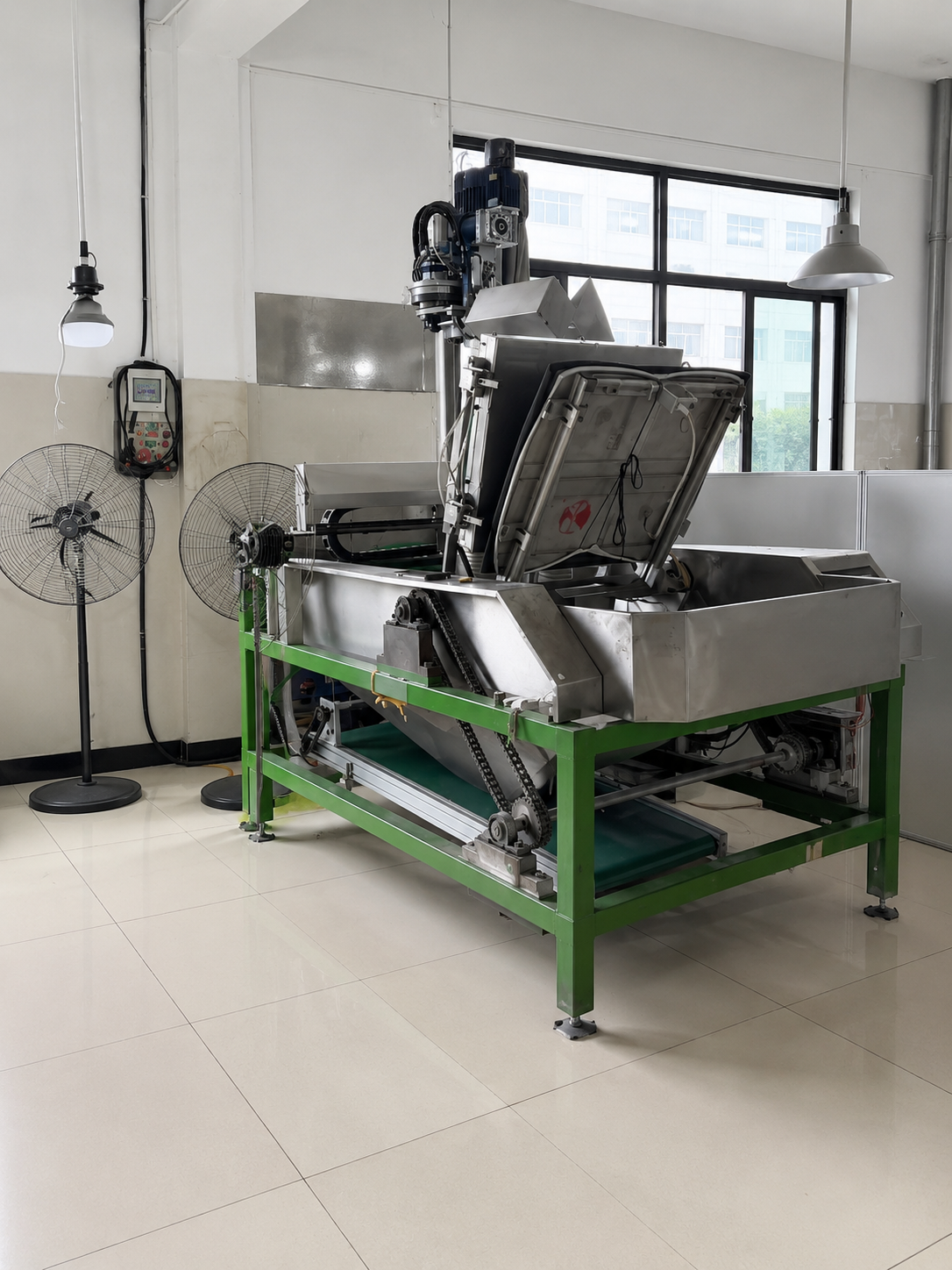
Because AB and aurora effects depend on layer thickness, they are the shades most sensitive to coating consistency. This is where a factory with its own coating line differs most visibly from a reseller.
Matching Stones to Application
| Application | Recommended Material | Typical Backing | Priority |
|---|---|---|---|
| Stage costume and wedding dress | Glass or K9 crystal | Hotfix or sew-on | Sparkle intensity and wash survival |
| Denim and casual apparel | Glass | Hotfix | Adhesion under repeated washing |
| Press-on and nail art | Glass or K9 crystal | Flat back | Precision size and colour range |
| Phone cases and resin crafts | Glass or acrylic | Flat back | Cost and colour variety |
| Fashion jewellery | K9 crystal | Pointed back | Optical clarity and setting compatibility |
| Holiday and seasonal crafts | Acrylic or glass | Flat back or hotfix | Cost per piece at volume |
Building the Specification
A complete rhinestone specification states six things: material, SS number with millimetre diameter, backing type, coating or colour reference, size tolerance, and the acceptance test for adhesion or colour. Anything left out becomes the supplier’s discretion, and discretion in this category usually resolves toward the cheaper option.
For buyers assembling a range, the efficient approach is to fix one material and backing combination as the standard, then vary size and colour within it. This keeps the coating process consistent across the range, which is what makes batch-to-batch colour matching achievable at all.